
New York’s 150-year carriage tradition now faces a courtroom showdown that could redraw the line between animal welfare policy and property rights.
Story Snapshot
- The Transport Workers Union and carriage owners filed a federal lawsuit challenging the ban.
- The City Council mandated a phaseout and worker-transition programs but only “considers” compensation.
- Plaintiffs argue the law targets carriages while other equine activities continue.
- A Central Park horse’s toxic-plant death fuels a dispute over park safety duties.
The Law That Ended a Landmark Tradition
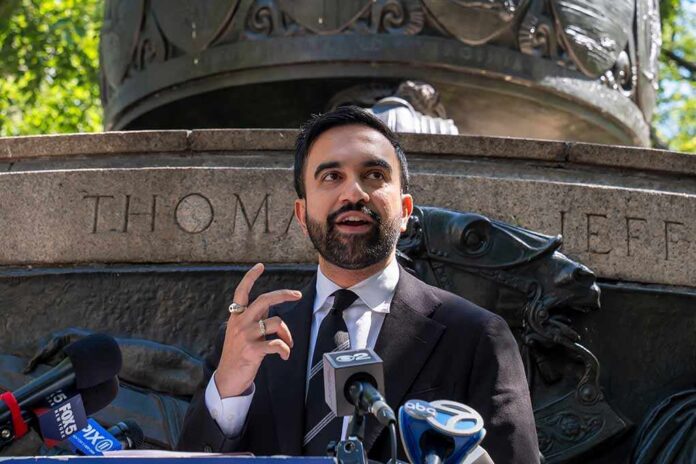
Mayor Zohran Mamdani signed a law to end New York City’s horse-drawn carriage industry by June 1, 2028, with City Hall framing it as a win for horse welfare and public safety. The administration says it will support about 200 affected workers with medallion buybacks, job training, and career services, and will publish a full transition plan by April 2027. The Council’s press materials add humane retirement rules for horses and a required workforce program.
The Council’s plan lists employment referrals, counseling, placement help, job fairs, and tuition assistance. It also tells the administration to consider programs to help owners place horses and dispose of equipment, and to consider compensation for the value of businesses, licenses, and equipment. That language matters. “Consider” is not “guarantee.” When livelihoods ride on city-issued licenses, that word choice sets up the fight now unfolding in federal court.
The Lawsuit That Hit Back the Same Day
The Transport Workers Union filed suit in the Southern District of New York within hours of the bill signing, joined by owners and a driver. Reported claims include constitutional violations, arbitrary and capricious action, and procedural defects. Plaintiffs argue the City singled out carriage tours while leaving other horse activities, such as riding and racing, intact. They also say the City pulled the rug on medallions that cost serious money, without a firm buyback requirement.
The complaint summary reported by outlets asserts a taking without just compensation, a claim that often hinges on whether the government destroyed a clear property interest and wiped out its use. The public record so far does not include the docketed complaint text, so details like the exact constitutional hooks and the requested relief remain pending in the files. But the thrust is clear: the City cannot erase a licensed business and shrug at the bill.
The Safety Lens: Welfare Framing Versus On-the-Ground Hazards
City Hall ties the phaseout to protecting horses and public safety, and it points to a transition path that steers workers to new jobs and studies an electric-carriage alternative. That message resonates with residents who see Central Park as a refuge and who remember high-profile incidents. The Council’s materials insist retired horses must be handled humanely, and that no horse ends up in slaughter or in another carriage business.
JUST IN: Mayor Zohran Mamdani has signed a law banning horse-drawn carriages from city streets by June 1, 2028, ending a 150-year tradition.
“For 150 years, horse-drawn carriages have been a fixture of Central Park. Today, we are bringing that chapter to a close.”…
— The Rubin Report (@RubinReportShow) November 19, 2026
The union counters with a stark case study: a carriage horse that died after eating a toxic plant in the park. News reports cite a Cornell necropsy tying the death to Japanese yew, while the Central Park Conservancy says rules already bar horses from eating vegetation and drivers must prevent it. The union wants hazardous plants removed or flagged and drivers warned. That clash shows how the same incident can anchor opposite policy claims: regulate smarter or ban outright.
What Courts Will Likely Weigh Next
Judges will ask hard questions that cut through slogans. Does a medallion create a protected property interest, or is it a revocable license? Did the City provide enough process and a rational basis for its line-drawing between carriages and other equine uses? Does “consider compensation” meet constitutional standards when livelihoods were built under city license? The City’s transition promises help its narrative, but the absence of a guaranteed buyback invites legal risk.
From a common-sense, conservative lens, fair play means government should not destroy a lawful investment without real and prompt compensation. If City Hall can end an industry with a press release and a “we’ll consider paying you,” any licensed trade is on notice. If the City proves that carriages are uniquely unsafe and that medallions confer no property right, it may win. But if owners show a taking or unequal treatment, the checkbook should open.
What to Watch Before the First Gavel Drops
Expect the City to highlight worker services, humane horse placement, and the study of electric replacements. Expect plaintiffs to surface purchase records, medallion values, and side-by-side comparisons with other horse activities to press the unequal-treatment theme. Discovery on Council procedures and the transition plan’s enforceability will matter. So will the official safety record on collisions, inspections, and veterinary data, not just viral clips or single incidents.
The case will test a basic civic promise: if you play by the rules the City sets, the City does not pull the ladder without paying for it. That principle keeps faith with workers, small owners, and future investors who keep cities vibrant. Win or lose, this fight will echo far beyond Central Park’s drives, into every industry that needs a license to work.
Sources:
washingtontimes.com, usnews.com, nydailynews.com, amny.com, nytimes.com, abc30.com, nbcnewyork.com