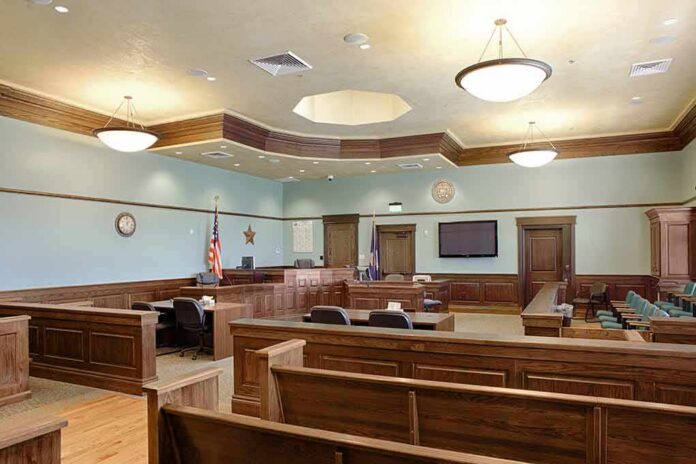
A sniper shot that silenced Charlie Kirk on a Utah campus is now echoing through a courtroom where the real battle is over what counts as proof and what smells like politics.
Story Snapshot
- Prosecutors say surveillance, DNA, and multiple confessions point straight to Tyler Robinson as Kirk’s killer.
- Defense attacks the evidence as hearsay and prejudicial while fighting media access and even the prosecutors themselves.
- The rifle, the etched bullets, and a trail of digital messages form a tight chain of circumstantial and forensic links.
- This preliminary hearing is about probable cause, but the stakes reach into America’s deeper problem with political violence.
The campus assassination that became a national stress test
Charlie Kirk was shot and killed while speaking at Utah Valley University in Orem on September 10, 2025, during a Turning Point USA event held outdoors on campus. The alleged shooter, 22-year-old Tyler Robinson, surrendered to law enforcement the next day and faces an aggravated murder charge, with prosecutors signaling a possible death penalty. Kirk was a major figure on the political right, close to President Donald Trump, which turned a Utah campus crime scene into a national flashpoint overnight.
Investigators and prosecutors say Robinson did not vanish into the crowd. Utah state investigator David Hull testified that surveillance footage shows Robinson on campus four different times the day of the shooting, allowing police to piece together his movements before and after Kirk was shot. Reuters and local coverage describe images of a man, identified as Robinson, moving around campus and near key locations tied to the attack, forming the backbone of the state’s timeline.
The rifle, the bullets, and the DNA that tie it together
The physical evidence centers on a bolt-action.30-06 rifle with a scope, found wrapped in a towel in a wooded area near the university—close to the suspected firing position. Utah Governor Spencer Cox and charging documents describe text messages where Robinson allegedly discussed leaving the rifle in a bush, wrapped in a towel, and needing to retrieve it from a “drop point,” which matches where police later found the weapon. Prosecutors say that connection alone is not abstract; it is grounded in location, content, and timing.
Forensic testing then pushed the case beyond circumstantial links. According to state and federal updates, Robinson’s DNA was found on the towel wrapped around the rifle and on a screwdriver recovered from the rooftop area investigators believe was used as the sniper perch. Prosecutors also plan to present DNA results tying Robinson to the gun itself, including contact points like the trigger or other surfaces, reinforcing that this was not just any abandoned rifle near campus.
Confessions across text, Discord, and family conversations
The most striking part of the case is not what cameras caught, but what Robinson allegedly said. Charging documents and media reports describe a confession trail that runs through texts to his romantic partner, Discord messages to friends, and statements to family members and a family friend who is a former sheriff’s deputy. CNN reported that he “confessed to the shooting multiple times” across these channels, and that these messages were turned over by his partner and others cooperating with investigators.
One detail stands out because of its mix of planning and bravado. Under his partner’s keyboard, investigators say they found a note in which Robinson wrote that he “had the opportunity to take Charlie Kirk” and was going to take it, consistent with texts discussing planning the attack for “a bit over a week.” Prosecutors say he also described inscribing phrases on bullets, drawn from online and gaming culture, referring to them as “mostly a big meme,” yet those etched rounds were later matched between the crime scene and his home.
How the defense is trying to pull the teeth from the state’s case
Defense lawyers are not pretending the evidence pile is small; they are trying to make it look unreliable, unfair, or improperly admitted. At the preliminary hearing, they objected to almost every exhibit—surveillance clips, videos of the shooting, and witness statements—as hearsay. The judge rejected most of those challenges but did insist prosecutors submit unedited versions of key videos, a nod to concerns about context and possible bias in edited footage.
https://twitter.com/Mosheh/status/2074562665779707938
In separate hearings, Robinson’s team pushed to seal many exhibits to avoid “infecting the potential jury pool,” arguing that intense media coverage and constant replay of graphic or emotional evidence could make a fair trial impossible. They have also twice tried to get the entire Utah County Attorney’s Office thrown off the case because one prosecutor’s teenage daughter attended the rally where Kirk was shot, calling that a conflict of interest. That move lines up with a broader defense strategy: focus on process and fairness more than offering alternate facts about who pulled the trigger.
Ballistics questions, political pressure, and what this hearing really decides
Not every piece of forensic evidence comes in clean. Defense lawyers have highlighted an analysis by the Bureau of Alcohol, Tobacco, Firearms and Explosives that could not conclusively link a bullet fragment from Kirk’s autopsy to the rifle found near campus. Legal analysts stress that this does not mean the gun is ruled out; it just means the federal lab did not have enough microscopic detail to say the fragment definitely came from that specific weapon.
Meanwhile, the courtroom is packed with high-profile figures: Donald Trump Jr., Kirk’s parents and widow, and national media outlets all watching every motion and objection. Commentators from right-leaning and mainstream outlets say prosecutors are using a “kitchen sink” approach—putting on far more evidence than is needed—to not only meet the low “probable cause” standard but also shape public opinion in a politically charged case. From a common-sense, conservative view, that raises a sharp question: are we watching a neutral search for truth, or a public show meant to prove that political violence will be crushed, even before a jury hears the full story?
Sources:
youtube.com, cnn.com, deseret.com, foxnews.com, reuters.com, pbs.org, ksl.com, abc7ny.com, facebook.com, nbcnews.com