The most shocking part of Max Azzarello’s story is not the fire, but how one sloppy headline turned a tortured conspiracy protest into a fake Tibetan drama that never existed.
Story Snapshot
- Police and major outlets say Azzarello was a conspiracy-obsessed protester, not a UN or Tibet activist.
- His own manifesto frames the fire as a warning about a “world coup” and Ponzi-style corruption.
- New York Post-style framing with a “Tibetan flag” clashes with what police actually reported.
- This gap shows how sensational media can twist extreme protest into clickbait politics.
What Really Happened Outside The Trump Trial Courthouse
Max Azzarello was a 37-year-old man from St. Augustine, Florida, who traveled to New York in April 2024 and set himself on fire in Collect Pond Park, across from the Manhattan courthouse where Donald Trump’s hush money trial was underway. Police said he walked into the park, threw pamphlets in the air, poured a liquid accelerant over himself, and then lit his body on fire. He was taken to the hospital in critical condition and died later that day.
New York City Police Department leaders did not describe a Tibetan protest, a United Nations complaint, or any ethnic cause. They called him a “conspiracy theorist” whose pamphlets were “propaganda-based,” focused on Ponzi schemes, mob fronts, and economic collapse. Detectives said the flyers were conspiracy theory material and that the accelerant looked like an alcohol-based cleaning solution. Police also stressed that he did not break through any security checkpoint to reach the park.
Inside His Manifesto: A Global Coup, Not A Tibetan Cause
The clearest window into his mind is a long manifesto he posted on Substack, titled “I have set myself on fire outside the Trump Trial.” In it, he calls his act an “extreme protest” meant to expose a “totalitarian con” and an “apocalyptic fascist world coup” run by governments and powerful elites. He spins a long story that ties United States government officials, the Central Intelligence Agency, tech billionaires, pop culture, and even cryptocurrency into one giant rigged game. He claims cryptocurrency is an “economic doomsday device” built to lock in global fascist control.
Trump and Biden barely appear in this document. He calls them “characters playing pretend, just like professional wrestlers,” not central villains. That is important. When someone sets themselves on fire outside a Trump trial, the easy narrative is “Trump protester.” But his own words say something different. He believed the whole system, across parties and borders, was part of a single corrupt scheme. That fits police language calling him a conspiracy theorist rather than a partisan or ethnic activist.
Where The Tibetan Flag Story Comes From
So where does the “lunatic with Tibetan flag” angle come from? Not from police briefings, and not from mainstream coverage by the British Broadcasting Corporation, American Broadcasting Company, Al Jazeera, or NBC News, which all describe conspiracy-themed pamphlets and an anti-government manifesto, but do not mention any Tibetan flag at the scene. The Tibetan twist appears in tabloid-style framing that treats a dramatic symbol as the center of the story, even without clear sourcing.
That kind of headline plays on a familiar pattern. Readers are primed to connect self-immolation to famous cases like monks in Vietnam or modern Tibet protests, where fire is tied to ethnic or religious oppression. So a “Tibetan flag” hook feels right to a casual reader. But feeling right and being true are not the same thing. When police, witnesses, and pamphlets all point to a man obsessed with global Ponzi schemes and crypto conspiracies, tabloid insistence on a Tibetan angle looks more like narrative opportunism than reporting.
The Clash Between Facts, Mental Health, And Media Spin
Friends told reporters they were in “total disbelief,” saying the man they knew was smart and funny, and pushing back on the caricature of him as a wild-eyed extremist. Other coverage highlighted his struggle with depression after his mother’s death and worsening drug use in 2023. That mix of grief, possible mental illness, and grand conspiracy beliefs fits what psychiatrists call “overvalued ideas” that can drive extreme self-destructive protests. He seems less like a calm political activist and more like a distressed man convinced only a shocking act could break through.
From a conservative, common-sense view, two problems stand out. First, media outlets have a duty to stick close to what police and hard evidence show, especially when a life has been lost. Adding a dramatic ethnic angle with no clear sourcing violates that duty and misleads the public. Second, mental health struggles and radical beliefs do not magically turn into a noble political cause. You can acknowledge his pain without turning him into a Tibetan martyr the facts do not support.
What This Case Shows About Modern Protest Narratives
This incident fits a broader wave of self-immolation and extreme protest where people light themselves on fire to draw attention to war, genocide claims, or systemic injustice. In other cases, like the airman who burned himself outside the Israeli embassy while shouting “Free Palestine,” the message is simple and clearly documented. With Azzarello, the message was tangled in pages of conspiracy writing that most people will never read. That gap invites lazy storytellers to fill the space with symbols that sell.
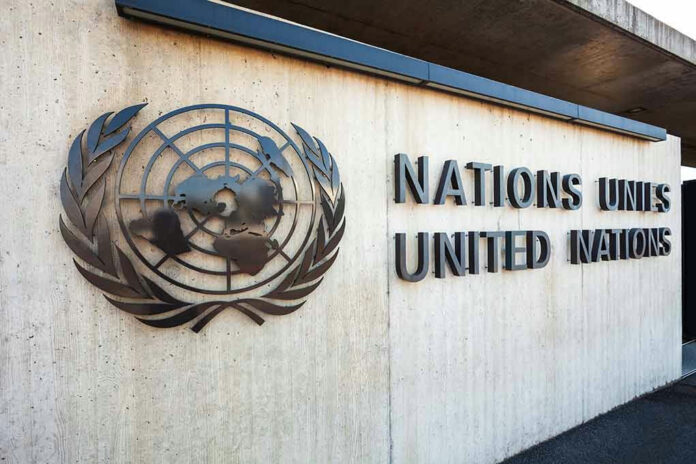
For readers, the lesson is harsh but useful. When a shocking act happens near a big institution—the Trump trial, United Nations headquarters, a major embassy—ask two questions before you buy the headline. What did police actually say? And what did the person actually write or record? In this case, both point to a man consumed by anti-government conspiracy theories, not a Tibetan flag protester. It is on us to resist clickbait and insist that even the most disturbing stories stay anchored to facts.
Sources:
nypost.com, publish.obsidian.md, bbc.com, nbcnews.com, abcnews.com, reddit.com, theconversation.com, psychologytoday.com, en.wikipedia.org, npr.org, cbc.ca, time.com, pmc.ncbi.nlm.nih.gov