

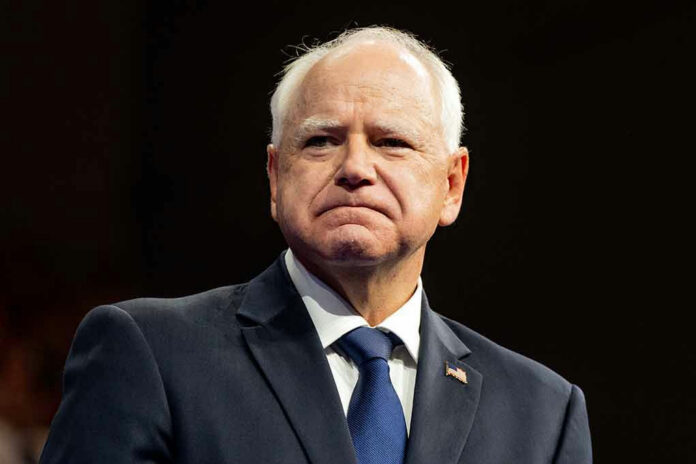
Minnesota Gov. Tim Walz signed off on a pardon for a man who pleaded guilty to repeatedly sexually assaulting a 10-year-old girl, wiping his criminal record clean and giving him a legal tool to fight deportation.
Story Snapshot
- The Minnesota Board of Pardons unanimously pardoned Tou Lue Vang on June 10, 2026, clearing his conviction for first-degree criminal sexual conduct against a child.
- Vang, 42, came to the U.S. from Laos as a child and faced deportation back to Laos after losing his legal status due to the conviction.
- The victim, who was 10 years old when the abuse began, sent a letter to the board supporting the pardon.
- The Department of Homeland Security blasted the decision, saying the pardon would erase the very conviction that justified Vang’s removal order.
- A state pardon can help a noncitizen contest deportation but does not guarantee they stay in the country.
What the Board Decided and Why
The three-member Minnesota Board of Pardons — Gov. Tim Walz, Attorney General Keith Ellison, and Supreme Court Chief Justice Natalie Hudson — voted unanimously to pardon Vang. The board cited a letter from the victim supporting the pardon, community support letters, and a recommendation from the nine-member Minnesota Clemency Review Commission, which had voted four to two in favor of clemency in April 2026. Ellison’s office confirmed all of this to The New York Times.
This POS
Illegal Alien Monster Repeatedly Raped 10-Year-Old Child in Minnesota – Tim Walz Issued Pardon to Shield Him from Deportation https://t.co/ZuJA5UnYgg #gatewaypundit via @gatewaypundit
— A.F. Branco – Political Cartoonist (@afbranco) July 2, 2026
Vang pleaded guilty to first-degree criminal sexual conduct under a plea deal that kept him out of prison. He submitted a letter to the board expressing remorse and argued that a pardon would allow him to stay with his wife and six children. The board has the final say on pardons, regardless of what the commission recommends. In this case, all three members agreed.
The Conviction That Triggered Deportation
Vang lost his legal immigration status because of that guilty plea. Federal immigration law makes noncitizens deportable when their convictions match specific offense categories under the Immigration and Nationality Act. Sexual abuse of a child is one of the most serious of those categories. The Department of Homeland Security’s acting assistant secretary Lauren Bis confirmed that the sexual conduct conviction was the direct basis for Vang’s removal order, and that the pardon would wipe out that legal foundation.
That is the crux of the controversy. A state governor’s pardon erases a conviction for immigration purposes in most cases, which can protect a noncitizen from deportation tied to that offense. It does not hand someone legal status or a green card. It simply removes the criminal record that triggered removal, forcing immigration courts to reconsider the case. Whether Vang ultimately stays in the U.S. is still an open question.
Federal Pushback Is Sharp and Specific
The Department of Homeland Security did not mince words. Bis called the pardon “absolutely insane” and accused Walz and Minnesota officials of prioritizing criminal illegal aliens over American citizens. Republican U.S. Rep. Pete Stauber of Minnesota called it “absolutely infuriating.” This is not the first time the Minnesota Board of Pardons has drawn this kind of fire. The board also recently pardoned Jai Vang, a Laotian national convicted of armed robbery in 1994, and separately pardoned another Laotian national with multiple assault convictions, drawing a nearly identical response from the Department of Homeland Security each time.
The three-person Minnesota Board of Pardons:
Gov. Tim Walz
A.G. Keith Ellison
Chief Justice Natalie HudsonUnanimously granted this child rapist a pardon.
He was being fast-tracked for deportation because of the conviction. https://t.co/VL0mvzIKV4
— Sean Nienow (@SNienow) July 2, 2026
Walz has said that immigration status alone is not a reason to grant or deny a pardon. That sounds reasonable in isolation. But when a governor rushes to call special sessions specifically timed to block federal deportation orders, the stated principle starts to look like a fig leaf. The pattern here is hard to ignore: Minnesota’s board has now pardoned multiple noncitizens facing imminent removal in rapid succession, each time drawing unanimous votes from the same three Democratic-aligned officials.
The Victim’s Letter Changes the Moral Equation — But Not the Policy One
The most unusual element of this case is the victim’s letter. She was 10 years old when the abuse started. She is now an adult, and she chose to write in support of Vang’s pardon. That matters. Victim voices deserve weight, and dismissing her letter would be wrong. But her personal forgiveness, however meaningful, does not settle the policy question of whether the state should use its pardon power to shield a convicted child sex offender from federal immigration enforcement. Those are two separate things, and conflating them is exactly what the board’s defenders are doing.
What Happens Next Is Not Guaranteed
The pardon clears Vang’s record and gives his lawyers a legal argument in immigration court. It does not end his case. Federal immigration judges still have discretion, and the Department of Homeland Security can continue to pursue removal on other grounds or challenge how the pardon applies. Legal experts note that state pardons do not automatically cancel deportation orders — they create an opening, not a guarantee. The fight over Vang’s future is likely just beginning, and so is the political battle over who gets to decide who stays in America.
Sources:
townhall.com, youtube.com, fox9.com, facebook.com, mn.gov, nyulawreview.org