

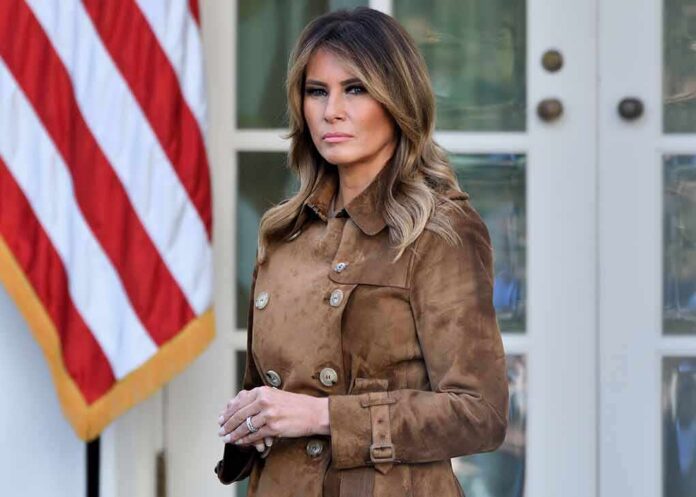
First Lady Melania Trump brought Russian and Ukrainian representatives to the same White House table after helping secure a tight, on-the-ground ceasefire in Oleshky to move people and aid out of harm’s way.
Story Snapshot
- The White House credited Melania Trump with initiating contacts and landing a localized ceasefire in Oleshky.
- Both sides agreed to pause fighting to allow evacuations and aid deliveries under set terms.
- Delegations arrived at the White House, including human-rights officials named by both countries.
- The pause ran several days and enabled a reported evacuation of nearly 800 civilians.
A First Lady turns soft power into ground truth
The White House said Melania Trump independently opened talks between Russia and Ukraine and secured a localized ceasefire centered on Oleshky, in the Kherson region. The public terms set out a stop to military activity, access for aid groups, and a defined evacuation route. The goal aimed small and concrete: move families to safety and push food and medicine into a hard-hit area. That narrow scope made the agreement possible when bigger deals remain out of reach.
Newsrooms tracked the next step to Washington. Reports said Ukrainian ombudsman Dmytro Lubinets and Russian human-rights commissioner Yana Lantratova would attend White House talks hosted by the First Lady. This placed human welfare at the center. Human-rights envoys can cut through political fog to fix practical problems: access, lists, buses, and timing. That is classic soft diplomacy—less about flags and more about lives saved now, not later.
The Oleshky pause: dates, duties, and purpose
Officials described a ceasefire window that ran roughly six days, from October 27 through November 1, 2026, with a clear humanitarian purpose. The Hill reported the pause began at 3 a.m. local time on October 27 and widened to ease convoy movements. These details matter. Clear hours, mapped routes, and contact points reduce risk on the ground. When shells stop and trucks move, people can cross. That is how small-scale pauses turn into real outcomes.
The White House said nearly 800 civilians were evacuated under the arrangement, alongside emergency deliveries. Local and national outlets echoed that number and described shipments of food and medicine reaching residents who needed relief. Numbers tell only part of the story. Each tally line means a family with a bag in hand, a bus door slamming shut, and a route held open long enough to reach safer streets. That is success defined in hours, not years.
Why this narrow deal worked—and what it signals next
Localized truces often succeed when they answer one question: how do we get people out and aid in today? Research on ceasefires shows short pauses tend to work best with simple rules and specific goals. They avoid grand claims and focus on access and time windows. This case fit that mold. It drew on the First Lady’s soft power to convene, framed the ask around civilians, and set modest, checkable tasks. That is a template others can copy in contested zones.
HAPPENING NOW
First Lady Melania Trump just walked out with officials from BOTH Russia and Ukraine at the White House following her historic Oleshky ceasefire deal to allow humanitarian aide:
"Together, we can create something MORE ENDURING than a temporary ceasefire!"… pic.twitter.com/zCwGJU2Vfj
— Conservative Brief (@ConservBrief) November 5, 2026
Conservatives value results over theater, and this was results-first. The White House set terms on paper, press tracked the dates and roles, and named officials came to talk through next steps. Giving credit to the person who lines up the calls and secures the pause aligns with common sense. People moved. Aid flowed. That is what counts. One brief note: some transcripts outside the official releases have date inconsistencies, but the established timeline points to late October and early November 2026.
What to watch as the talks move forward
Humanitarian corridors live or die by clarity and compliance. Future steps will likely focus on keeping contact lines open, confirming safe routes, and syncing aid schedules. The White House framed this as a starting point, not an end state. If the delegations can lock in repeatable procedures—who calls whom, when convoys roll, how incidents are handled—then the Oleshky model can expand to nearby areas. That is how small pauses scale into wider relief without overpromising.
Sources:
youtube.com, whitehouse.gov, cbc.ca, themoscowtimes.com, thehill.com