
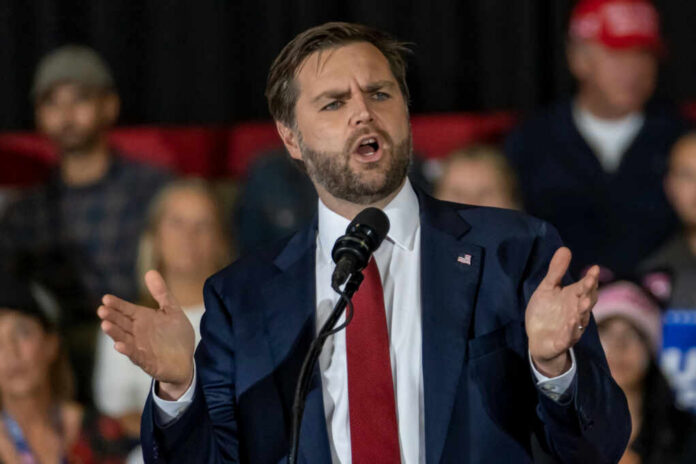
Vice President JD Vance drew a bright line after the midterms: “The reason we lost is the war.”
Story Snapshot
- Vance blamed Republican midterm losses on the Iran war and its costs.
- He listed four voter priorities: end the war, tackle prices, put America First, and reset ties with Israel.
- He argued many 2024 Trump-Vance voters shifted to Democrats in 2026.
- Reports said the war also pushed oil prices higher, worsening inflation pain.
Vance’s Diagnosis: A War That Bled Votes And Wallets
Vice President JD Vance said the Iran war drove the Republican collapse in the 2026 midterms. He posted that “the reason we lost is the war” and tied the result to voters who felt real costs at home. He argued the conflict fueled higher energy prices on top of rising bills. He framed the backlash as a pocketbook revolt and a foreign policy rejection. He said many 2024 Trump-Vance voters crossed over to Democrats in 2026, a claim echoed in major coverage.
Vance named four clear voter priorities instead of vague rhetoric. He said voters wanted to end the Iran war, focus on cost of living and inflation, put America First, and change the United States relationship with Israel. He presented these as hard lessons, not talking points. He also cited a respected pollster’s findings, though public reports did not include the survey’s full methods or crosstabs. The thrust was simple: stop the war, fix prices, refocus at home, and recalibrate the alliance.
The Political Math: Midterm Gravity Meets War Fatigue
Midterms usually punish the president’s party, even without a major conflict. Political research shows the party in the White House tends to do worse in midterms than in the prior election, a long postwar pattern. Vance’s claim adds a war effect to that built-in headwind. He contends the Iran conflict turned a normal midterm slide into a rout by angering swing voters and soft Republicans. He linked that anger to higher oil prices that tightened family budgets.
War politics can cut fast when costs rise and goals feel vague. Studies find conflicts can sap support for incumbents, especially when voters feel the burden and see limited gains. Vance’s case fits that model. He tied an overseas fight to kitchen-table pain, then argued voters used the midterms to send a message. That message, in his telling, was not subtle. End the war. Lower prices. Prioritize American interests first. Rework the Israel relationship to match those aims.
Inside The Rift: Policy Course Or Post-Election Reset?
Reports described Vance stepping away from the administration’s war stance after the losses. Headlines framed his comments as a break with President Trump and a bid to shape a “New Right” path forward. Coverage said Trump acknowledged the war played a part in the losses but continued to defend it, leaving a public split between the president and vice president over cause and remedy. That dynamic ensured the debate moved from analysis to an open struggle over the party’s direction.
COLLABORATION AND POWER STRUGGLES INSIDE TRUMP'S CAMP
According to Fox News, JD Vance is seeking to build a “new right” coalition among disillusioned Trump supporters following the Republicans' crushing midterm election defeat.
His strategy reportedly involves winning back… pic.twitter.com/qwazGQzzcO
— Rohoza (Дев'ятий) Mykhailo 🇺🇦🇱🇹🇨🇦 (@Oct7NeverForget) November 5, 2026
Conservatives judge leaders by results, clarity, and cost control. On those terms, Vance’s four-part focus reads like common sense triage. End a costly war that voters do not back. Attack inflation that drains wages. Put America’s priorities at the top of the list. Define a practical, interests-first approach with Israel. The strongest part of his case is the direct link between the war and pocketbook pain through energy prices, which voters feel each week at the pump.
What Comes Next: Proof, Policy, And A Map Back To Voters
Two tests now decide whether this strategy sticks. First, evidence. Vance’s claim about voter switching carries weight because it is specific, but fuller public data would lock it in. He pointed to a pollster’s top answers, yet the public record does not show the full methods. Second, policy. “Change the relationship with Israel” needs defined steps on aid, arms, and objectives to turn a slogan into a plan. Clear, measurable policy would show seriousness beyond post-election heat.
The electoral path runs through families fighting high prices and seeking stability. Vance has named their concerns and tied them to a foreign policy shift. The question is execution. If Republicans pair a clean exit strategy from the Iran war with a credible plan to lower costs and prioritize American interests, they will have a simple case to make. If not, midterm gravity will not be the only force pulling them down next time.
Sources:
facebook.com, cbsnews.com, bbc.com, boston.com, cp24.com, lemonde.fr, nbcchicago.com