Nine mourners were killed and about 40 wounded when gunmen attacked a Christian funeral at a Greek Orthodox church in southern Jordan, and authorities called it terrorism.
Story Snapshot
- Gunmen opened fire during a funeral at St. George’s Greek Orthodox Church in Karak Governorate.
- Jordan’s Public Security Directorate labeled the shooting an extremist terrorist act targeting Christians.
- The death toll rose to nine, with roughly 40 injured, as hospitals treated victims.
- King Abdullah ordered a firm “iron fist” response and a sweeping manhunt.
What Happened In Karak And Who Was Hit
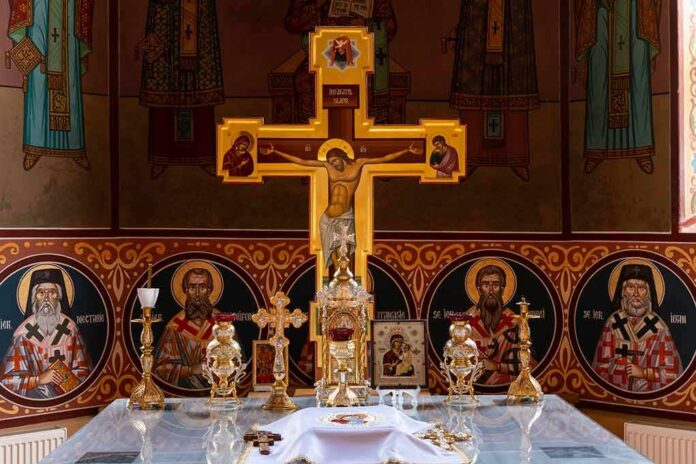
Gunmen arrived at St. George’s Greek Orthodox Church as a funeral was underway in Karak Governorate and opened fire on mourners. The attack left nine people dead and about 40 injured, according to updated counts from authorities and major outlets tracking hospital admissions and fatalities. The Public Security Directorate described the shooting as an extremist terrorist act aimed at Christians attending the funeral service. The event turned a place of mourning into a crime scene within minutes.
Eyewitnesses described chaos as shots rang across the courtyard before the service had ended. A priest urged people to get down as mourners scrambled for cover. A survivor told reporters the firing lasted several minutes and people crawled to escape the line of fire. Surveillance footage reported by one outlet showed at least three attackers approaching the entrance before the shooting began, underscoring a planned, coordinated assault rather than a random outburst.
How Authorities Responded And Why It Matters
King Abdullah ordered security forces to act with an “iron fist” and directed a nationwide effort to find the attackers. Police set up checkpoints, expanded patrols, and launched a large investigation, while health officials mobilized ambulances and hospitals to handle mass casualties. The clear terrorism label carried weight. It signaled a state view that the target was not only a church, but Christians gathered for a funeral, and that the aim was to spread fear across a minority community.
Jordan rarely sees mass attacks on Christians, who make up a small share of the population. That rarity made the church setting stand out. It shaped both the quick terrorism classification and the scale of the response. Officials emphasized unity and warned that anyone involved would be hunted and brought to justice. That message echoed through state media and community leaders as funerals and hospital visits drew national attention.
The Victims, The Venue, And The Community Shock
The death toll rose as hospitals reported victims who succumbed to wounds, moving early reports of seven or eight dead up to nine. Injuries reached about 40. Families gathered at emergency rooms and morgues while clergy comforted the grieving. The church’s role as a community anchor turned it into a symbol of resolve as well as loss. Statements from priests and survivors stressed faith, calm, and the need for strong security to deter any repeat.
The Church of Jesus Christ of Latter-day Saints extended condolences after a deadly shooting at Saint George Greek Orthodox Church in Jordan. Gunmen opened fire during a funeral on October 23, killing seven people and injuring 40 others, according to authorities cited by The… pic.twitter.com/KqHrHjomEi
— Moroni Channel (@MoroniChannel) October 26, 2026
The setting was not incidental. The funeral brought a large Christian crowd together at a known time and place. Reports from authorities and several outlets explicitly called it a terrorist attack targeting Christians, citing the venue and the gathering itself as evidence of intent. That focus aligns with common sense: attackers choose places that maximize shock and vulnerability. A church funeral offers both. As facts solidify, the country’s stability depends on swift arrests and visible justice.
What We Know And What Comes Next
Officials have not publicly identified the gunmen or tied them to a specific group. No organization claimed responsibility at the time of reporting. The lack of a claim does not blunt the gravity of the state’s terrorism finding. The core facts remain firm: multiple shooters attacked a Christian funeral at a church, killed nine people, and wounded about 40 others, and the kingdom has moved its security machinery to full speed.
Jordan’s leaders framed the response around unity and deterrence. A credible path forward includes releasing a clear incident timeline, securing and authenticating video evidence, and showing how investigators link weapons, movements, and suspects. Those steps harden public trust and warn future attackers that Jordan will not let terror carve wedges into its social fabric. Order, transparency, and equal protection are the spine of stability in a tough neighborhood.
Sources:
townhall.com, abc17news.com, cbc.ca, forth.news, aljazeera.com, reuters.com