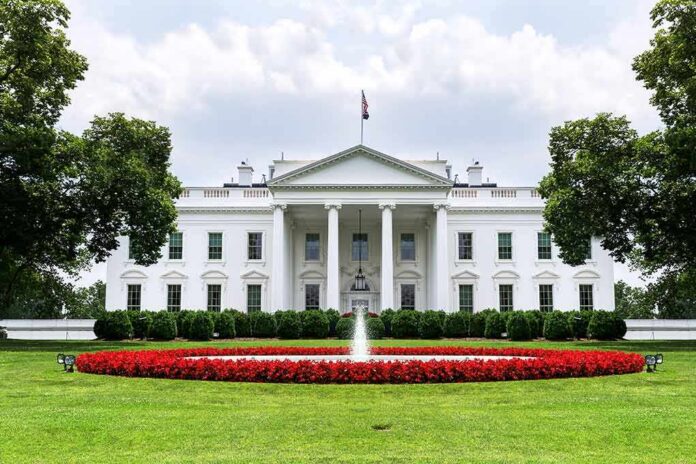
Philadelphia’s top prosecutor said he wants a souvenir from the White House ballroom “after we all blow it up,” and the fallout says more about our politics than about plaster and chandeliers.
Story Snapshot
- Krasner used “blow it up” about Trump’s White House ballroom during a public speech.
- He framed it as an “official ceremony” years from now, not an attack.
- He joked about selling debris as paperweights to repay taxpayers.
- Debate now centers on hyperbole versus true threat in political speech.
What Krasner Said And Where He Said It
Philadelphia District Attorney Larry Krasner spoke at the President’s House event in Old City. He slammed President Trump and the new White House ballroom. He said he would keep a piece of it “after we all blow it up.” He added the demolition would happen in an “official ceremony.” He linked it to a future change in power and joked about selling the scraps as paperweights to repay taxpayers. Critics seized on the words. Supporters pointed to the context.
Philadelphia DA Larry Krasner is facing backlash after saying he wants to “blow up” the White House ballroom and keep a piece of it as a paperweight on his desk.
The remark is drawing criticism over the rhetoric and its reference to destroying part of the White House.
Photo via… pic.twitter.com/97VWMBRMly
— TalkRadio 77 WABC (@77WABCradio) August 26, 2026
Video and reports capture the key phrases. The recording shows Krasner saying the ballroom would be “blown up,” and that he would take a piece for his desk. News accounts quote him adding “official ceremony,” which anchors the comment to a lawful teardown years down the road, not a call to violence now. That matters. Words do not float free from time and place. The setting was a public ceremony, not a secret plot.
How The Phrase Landed And Why It Stuck
Opponents see the line as reckless, even dangerous. They argue a top lawman should avoid language that sounds like a bomb threat. They also note that violent metaphors from powerful officials can carry weight. That is a fair concern. But Krasner’s timeline, the “official ceremony” framing, and the desk paperweight punchline point to rhetorical hyperbole. That is the classic mode of political smack talk in America, not an operational plan.
Courts and scholars often treat this kind of exaggeration as protected speech. Rhetorical hyperbole is speech that no reasonable person reads as a literal fact claim or a present threat. It is designed to spark feeling and paint a picture. That defense shows up often in defamation and true-threat cases. The key test is context, audience, and the words themselves. Krasner’s future-tense setup and ceremonial framing favor the hyperbole side of the line.
Why This Fight Feels Familiar
Modern political talk leans on shock lines and big images to break through noise. Speakers reach for metaphors of wrecking, burning, or blowing up to signal change. Listeners then argue over meaning. Some hear reform. Others hear menace. Research on political language calls this style strategic exaggeration. It lets a speaker energize allies while keeping legal distance from literal harm. That does not excuse poor judgment, but it explains the pattern.
Conservatives value law, order, and plain talk. On that score, public officials should choose words that leave no doubt. Voters deserve clarity from prosecutors who wield power. Krasner’s line gave critics a gift and blurred a bright line. Yet facts matter. The record ties his “blow it up” to a lawful teardown years in the future, under a different administration, with a wink about selling souvenirs. That reads as a taunt, not a threat, under common sense and the law.
The Stakes For Speech And Standards
America needs both tough debate and safe streets. The bar for true threats must stay high, or political speech will freeze. But the bar for public judgment should also stay high. Voters can reject trash talk without branding it criminal. The sound path is simple. Hold leaders to adult language when they hold serious jobs. Demand exact words when they claim serious things. And keep context attached to clips, or the truth gets sawed into parts.
Bottom Line
Krasner’s “blow it up” line was loud on purpose. It hit a nerve because law-and-order jobs demand steady tone. The full clip and quotes point to a symbolic future demolition, not a plan to bomb a building. That is why the claim works as politics and fails as a threat. The wiser lesson is not left or right. It is this: words from people with badges and budgets should build trust first, and punchlines second.
Sources:
twitchy.com, nbcphiladelphia.com, youtube.com, facebook.com, dailywire.com