
As Europe moves to tighten sanctions on Iran over the Strait of Hormuz, American families and drivers could once again pay the price for another foreign crisis made worse by years of failed globalist energy policy.
EU Builds on a Longstanding Web of Sanctions Against Iran
European Union institutions are not starting from scratch as they move to sanction Iranians accused of blocking or disrupting the Strait of Hormuz. Brussels has kept restrictive measures on Iran in place for over a decade, first over human rights violations in 2011, then over nuclear activities, and later for military support to Russia’s war in Ukraine. The official sanctions map shows asset freezes, travel bans, and broad trade restrictions already baked into European law.
European Union documents explain that all funds and economic resources belonging to listed Iranian individuals and entities must be frozen, and that Europeans are prohibited from making assets available to them. After the United Nations snapback process in 2025, the Council of the European Union formally reimposed sweeping nuclear-related sanctions, including bans on Iranian oil, gas, and petrochemical imports, as well as transport and financial restrictions tied to Iran’s non‑performance of nuclear commitments.[2] The new Hormuz move plugs into that dense sanctions architecture.
New Hormuz Focus: Maritime Freedom Meets Energy Reality
Reports from European diplomats and regional outlets say the European Union will widen its Iran sanctions criteria to include people and entities deemed responsible for obstructing freedom of navigation in the Strait of Hormuz. European foreign policy officials describe this as defending shipping lanes and protecting global energy flows, stressing that the bloc already has a naval mission in the region and wants more assets deployed.[2] Public briefings frame sanctions as a deterrent tool designed to “bite,” not just symbolic diplomacy.
EU nations moved Friday toward imposing sanctions on Iranian officials and others involved in blocking the Strait of Hormuz, calling the blockade “contrary to international law.”
The bloc took a technical step to expand its existing Iran sanctions framework, allowing more…
— Iran International English (@IranIntl_En) May 22, 2026
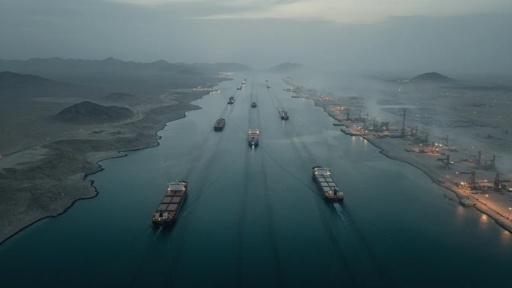
Those policy moves come as Tehran’s confrontation with the West has grown more dangerous. Coverage from the region describes how Tehran’s actions around Hormuz, following the escalation of war involving the United States and Israel, disrupted a major share of global oil and liquefied natural gas traffic. For Americans already weary of high gasoline and utility bills fueled by years of green experiments and hostility to domestic drilling, any shock to one‑fifth of the world’s seaborne energy trade is a direct pocketbook concern. An unstable chokepoint abroad magnifies past policy mistakes at home.
Thin Public Evidence and Conflicting Narratives
Despite the serious stakes, the publicly available record on the alleged “blockade” is surprisingly thin. The strongest European Union documents in the open record detail human‑rights and nuclear sanctions, not specific legal findings about individual acts that physically blocked ships in Hormuz.[1][2] Secondary reports and commentary repeatedly assert a blockade, but they do not supply naval incident reports, shipping logs, or maritime safety notices that would show exactly what happened, how many ships were affected, and who gave which orders.
🚨 JUST IN:
🇪🇺🇮🇷 The EU is reportedly moving toward new sanctions on Iran over disruptions in the Strait of Hormuz. pic.twitter.com/DggUSZJP3l
— 𝐊𝐚𝐦𝐫𝐚𝐧 𝐀𝐬𝐠𝐡𝐚𝐫 (@Karman_1s) May 22, 2026
That gap has allowed rival narratives to flourish. Iranian officials quoted in media coverage deny responsibility for blocking the strait and claim that United States and allied military actions triggered the crisis, not Tehran. Other commentators, including Russian representatives at international forums, accuse the West of hypocrisy on maritime rules, pointing to past Western naval actions while criticizing new sanctions on Iran. With so much of the underlying intelligence and shipping data classified or paywalled, ordinary citizens are left to sort through competing political stories rather than hard evidence.
Sanctions as Signaling, and What It Means for America
Policy analysts who track sanctions note that once a country is under extensive restrictions, new measures often function more as political signaling than as a fresh economic hammer. The European Union’s Iran program fits that pattern. Sanctions were first imposed in 2011 for human rights abuses, expanded for nuclear proliferation, then reimposed in 2025 under the snapback mechanism.[1][2] Adding Hormuz‑related designations is therefore less a brand‑new punishment than another layer on an already thick stack of restrictions.
EU expands sanctions framework to target Iran over Strait of Hormuz actions #IranWar https://t.co/vbqYe5k4ep pic.twitter.com/wIv3VPn81R
— Gulf Today (@gulftoday) May 22, 2026
For American conservatives, two concerns stand out. First, Western dependence on foreign energy makes our households vulnerable whenever distant bureaucrats or hostile regimes play games in maritime chokepoints. If European green ideology and American left‑wing war on fossil fuels had not strangled domestic production for years, a crisis in Hormuz would matter less to our wallets. Second, broad multilateral sanctions crafted in Brussels or at the United Nations rarely come with the transparency, accountability, or constitutional checks Americans expect from their own government.
Trump’s Posture and the Case for Energy and Constitutional Strength
Under President Trump’s second term, Washington’s stance has differed sharply from European habits. The administration has pushed to unleash American oil and gas, challenged globalist climate treaties, and refused proposals that would tax or toll United States shipping in Hormuz, arguing that free navigation cannot be held hostage by regional schemes. That energy‑first approach aims to shield American families from price shocks created by foreign crises while maintaining a strong deterrent posture in key sea lanes.
Still, conservatives should watch how European sanctions policy evolves, because what Brussels normalizes today can become tomorrow’s pressure campaign on American companies, banks, and even individual citizens. A sanctions system that starts with real Iranian abuses can drift into broader financial surveillance, speech policing, and extraterritorial rules that cut against United States constitutional principles. The answer is not to excuse Tehran’s aggression, but to insist that Western responses be evidence‑based, transparent, and anchored in national sovereignty rather than unelected global bureaucracies.
Sources:
[1] Web – EU extends Iran sanctions, citing human rights concerns – Jurist.org
[2] Web – UN and EU Reimpose Sanctions on Iran Following Snapback …