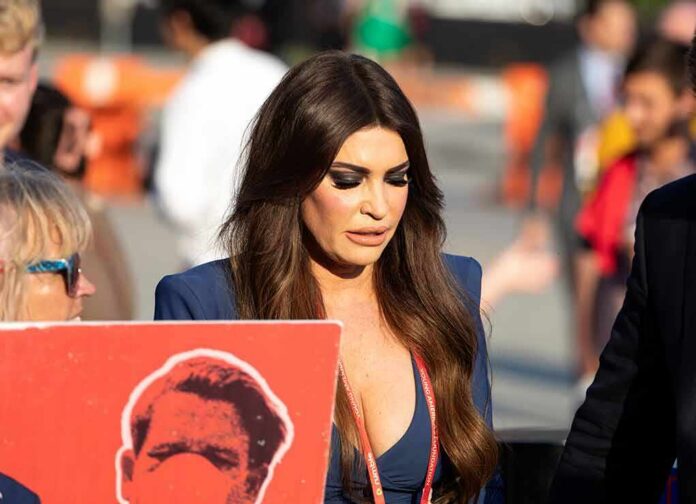
A top White House official praised Kimberly Guilfoyle’s work one breath before asking her to quit the next.
Quick Take
- The White House asked Kimberly Guilfoyle to resign as Ambassador to Greece on October 13, 2026, while calling her “a wonderful asset to the team.”
- President Trump reportedly said she “was doing a good job” in Greece but added, “we didn’t like what we were reading.”
- The request followed reports that Guilfoyle pushed a Trump donor to cover a $100,000 credit-card bill.
- Guilfoyle denied the allegations and said she would “vigorously defend” her name and reputation.
A Praise-and-Push-Out Message That Confused the Public
White House Press Secretary Katie Zacharia delivered an unusual one-two punch on October 13. She confirmed the administration had asked Guilfoyle to step down, then immediately softened the blow. “She has been a wonderful asset to the team, and we wish her well,” Zacharia said, pairing a compliment with a pink slip in the same breath.
That contradiction sits at the center of this story. Officials did not claim Guilfoyle failed at her job. They praised her, then removed her anyway. Trump reportedly summed up the split this way: “She went to Greece, she was doing a good job, but we didn’t like what we were reading”. The words “what we were reading” point squarely at conduct reports, not embassy performance.
What The Reports Actually Allege
The resignation request came after Politico reported that Guilfoyle pressed a Trump donor seeking White House access to pay off a $100,000 American Express bill. That is a serious claim. It suggests access to power may have been dangled in exchange for money, a line conservatives have long demanded politicians never cross. If true, it would be a betrayal of the public trust Guilfoyle was appointed to uphold.
But “if true” matters here. Guilfoyle has flatly denied it. “These allegations are false, and I intend to vigorously defend my name, my reputation, and my integrity,” she wrote, framing her ambassadorship as “the honor of a lifetime” rather than a failure. Her legal team went further, telling reporters the disputed payment was actually unpaid compensation for speaking engagements and appearances that happened before she ever took the ambassador post, not a pay-for-access scheme.
Secretary Rubio Kept His Distance From The Fight
Secretary of State Marco Rubio had a chance to weigh in and largely declined. He praised the embassy’s work in Greece but would not touch the allegations against Guilfoyle directly, saying bluntly that a press setting “is not the forum” for that discussion. That restraint is notable. It suggests the State Department views this as a personnel and reputational matter, not one where the ambassador’s actual diplomatic output is in question.
No published State Department evaluation, inspector general report, or named Greek official has surfaced disputing Guilfoyle’s diplomatic performance. That absence matters. It means the praise from Trump and the White House was not empty political spin designed to cushion a firing. It reflects a real, if unquantified, assessment that she handled the job itself well, even as the allegations piled up around her personal conduct.
A Pattern Bigger Than One Ambassador
Donor-appointed ambassadors carry a built-in tension that career diplomats mostly avoid. Franklin Roosevelt learned this when he appointed campaign donor Joseph Kennedy to London, only to watch Kennedy’s own views create friction with his hosts. Guilfoyle’s situation echoes an old pattern: political loyalty secures the post, but personal conduct determines how long it lasts.
The ambiguity here is real and worth naming plainly. Nobody has produced authenticated messages, a forensic review, or a formal ethics finding settling whether Guilfoyle crossed a line or whether this is a political hit job built on secondhand claims. An allegation is not a conviction. Until records are released or a formal inquiry concludes, Americans are left weighing a donor’s claim against an ambassador’s denial, with the White House caught praising her work while showing her the door.
Sources:
facebook.com, edition.cnn.com, politico.com, wcnc.com, daytondailynews.com, au.news.yahoo.com, independent.co.uk