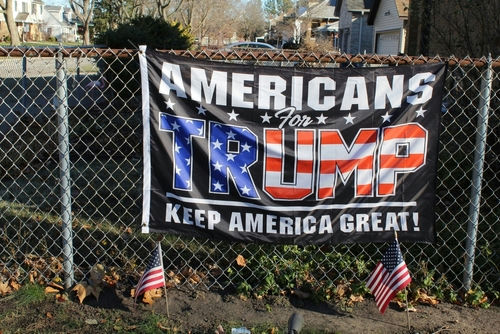
A 69-year-old Army veteran known for a house draped in pro-Trump banners was left fighting for his life, and the most important fact still missing is motive.
Story Snapshot
- Police arrested a 32-year-old suspect and booked him on attempted murder after an afternoon assault in Escondido [1].
- The victim’s property is locally famous for pro-Trump and patriotic displays, heightening community tension [1].
- The victim’s wife believes the attack targeted their politics, but investigators have not publicly confirmed motive [4].
- A bystander intervened during the beating and the suspect fled before arrest, according to local reporting [4].
Police facts establish the crime, not yet the why
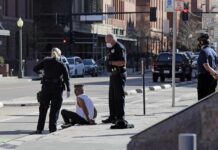
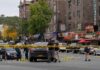
Escondido police responded around midafternoon to an assault near East Mission Avenue and Buchanan Street, where they found a severely injured man and later arrested 32-year-old Thomas Caleb Butler on suspicion of attempted murder, booking him into jail. Reporters cited the police case number and stated the victim was hospitalized in critical condition. Those details anchor the event as a violent felony with a clear suspect, timeline, and location—yet without an official motive released to the public [1].
Local broadcasts and print coverage described the home as a neighborhood landmark for its unapologetically political character: American flags, pro-Trump signs, and themed street names that left no doubt about the residents’ views. That visual identity matters because it frames public perception of the attack. Once a house becomes a symbolic lightning rod, any violence there quickly reads as political in the court of public opinion, long before prosecutors file a theory of intent [1].
Firsthand belief meets a public-record gap
The victim’s wife told television reporters she believes her husband was attacked for the flags and the support for former President Donald Trump. She emphasized his service and their long time in the home, and affirmed on camera that politics drove the assault. Her testimony is direct and sincere, and it helps explain the family’s fear and the community reaction. Yet the police, at least publicly, have not endorsed that conclusion, leaving a gap between lived experience and official attribution [4].
A witness said a young man assaulted the homeowner and that he stepped in with a punch, which appears to align with security footage indicating a fall and intervention. Reports added that the suspect fled before officers later apprehended him. Those concrete details paint a discrete criminal act rather than an accident or medical episode. They do not, by themselves, settle why the assailant chose that house or that man at that hour, which remains the core unresolved question [4].
Polarization, symbols, and the risk of narrative outrunning evidence
Reporters have noted the couple previously received threats related to their politics, which situates the event in a tense neighborhood context. That history, if documented in police logs or prior complaints, would support a pattern that aligns with the wife’s belief. However, public releases from investigators have not affirmed a political motive. When authorities stay silent on motive, public debate fills the vacuum, and national outlets often compress nuance into a quick storyline that can harden before facts ripen [4].
A common-sense standard, consistent with conservative values, asks for both compassion for victims and clarity on facts. The arrest on attempted murder reflects the severity; the veteran’s condition demands prayer and justice. The motive question, though, should rest on evidence: statements by the suspect, charging documents, body camera audio, surveillance footage with intelligible audio, prior documented threats, or digital traces connecting the suspect to the Trump-themed property. Without that foundation, prosecutors risk building a case on inference rather than proof [1].
What would close the loop on motive
Several items would move this from inference to confirmation. First, the arrest affidavit or probable-cause statement could disclose statements, observed behavior, or recovered evidence pointing to political targeting. Second, body-worn camera video, 911 calls, and dispatch logs might capture utterances that clarify intent. Third, full-release security footage could show pre-attack loitering, gestures, or audible remarks. Fourth, digital forensics on the suspect’s phone or accounts could reveal prior interest in the home or hostility linked to its flags [1].
Community trust improves when officials present a careful accounting grounded in verifiable records and when commentators resist racing past the evidentiary stop signs. The public already knows key facts: a brutal assault, a suspect in custody, and a victim whose home is a magnet for attention. The missing piece—why this happened—requires documentary answers. Until then, hold two truths together: the symbolism of that home likely shaped perceptions of risk, and the justice system still owes the country a clear, corroborated motive [4].
Sources:
[1] Web – California man charged with attempted murder of pro-Trump neighbor
[4] YouTube – Escondido man hospitalized after attack outside his Trump-themed …