

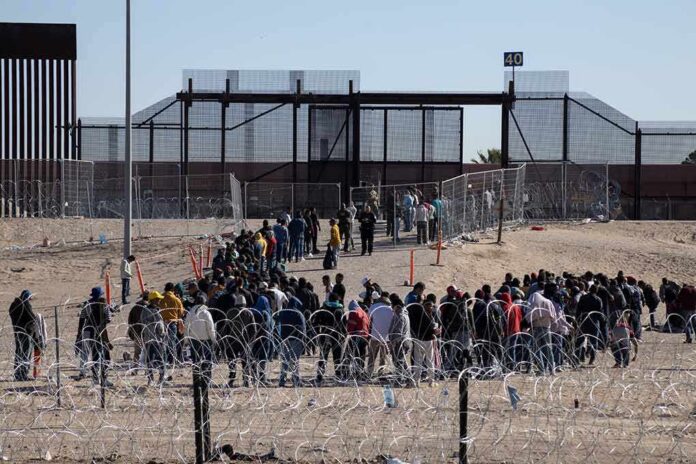
One tiny Spanish city just watched its population nearly double in a day as tens of thousands of people poured in from the sea, and now even the United States is telling Americans to think twice before going there.
Story Snapshot
- About 50,000 to 60,000 migrants crossed from Morocco into Ceuta in less than 48 hours, overwhelming the enclave.
- At least 67 people died in the rush, prompting Spain to call it a security emergency and deploy troops.
- Spain has installed a 500-meter floating barrier off Ceuta’s coast to block future mass crossings.
- The United States is urging Americans to reconsider travel to Ceuta as Spain scrambles to lock down the border.
Ceuta’s sudden shock: a tiny city flooded in hours
Ceuta is a small Spanish territory on the coast of North Africa, home to fewer than 85,000 people and pressed up against Morocco. In less than two days, Spanish officials say about 50,000 migrants crossed into the enclave by land and sea, with local leaders putting the figure closer to 60,000. That surge is equal to well over half the city’s population. Many arrived by swimming around breakwaters or climbing near the border fence in chaotic scenes caught on video.
The rush was not a slow build. It was a wave. People moved at once, packing beaches, seawalls, and narrow routes into the city. Spain’s Interior Ministry estimated that more than 48,000 of those who entered returned to Morocco within 48 hours, many on their own and many after being guided back by Spanish forces. That pattern fits a familiar script in Europe’s border crises: sudden shock, fast political reaction, and then rapid dispersal once the cameras arrive.
Deaths at the border and the floating wall response
Spanish officials have confirmed at least 67 deaths linked to the crossing so far, and some reports now put the toll above 70. Many drowned while trying to swim into Ceuta; others were crushed while climbing the breakwater and border fence in dense crowds. Those numbers matter. They underline what happens when migration turns into a stampede and when people trust rumors from social media more than actual policy signals coming from governments.
Spain responded with force and hardware. Civil Guard police began laying a 500-meter floating barrier off the Tarajal breakwater, one of the main entry points used by migrants. The barrier is inflatable and runs 30 to 70 centimeters above the water, with about a meter extending below the surface. An outer line of naval buoys adds another layer, while a channel between the barriers lets patrol boats move and watch the sea. This is not a symbolic move. It is a physical wall on the water, meant to make the risky swim far harder.
From humanitarian surge to sovereignty emergency
Spanish leaders did not describe this as normal migration. Prime Minister Pedro Sánchez called the surge a “violation of Spanish sovereignty” and promised fast returns for those who entered illegally. Ceuta’s local president urged Madrid to declare an emergency as the city’s streets, shelters, and hospitals strained to cope. Troops moved in to back up the Civil Guard, reinforce fences, and guide thousands back across the border, turning a coastal tourist spot into a militarized zone overnight.
At the same time, this was not an invasion in the military sense. Most of the migrants were young men from Morocco seeking work and a future in Europe. Many believed they would be allowed to stay because of recent court rulings that restricted rapid sea returns. That mix of legal change, rumor, and economic stress created a brief window that tens of thousands tried to squeeze through. The result was a humanitarian disaster handled with security tools.
Why Washington cares: lessons for American border debates
As Ceuta struggled, warnings began spreading on American social media feeds that the United States government now urges Americans to reconsider travel to the enclave. That kind of advisory makes sense. A place that just saw 50,000 people push through its border in 48 hours, with dozens dead and troops in the streets, is not a normal tourist destination. It is a pressure point in Europe’s border system and a live case study for American debates over sovereignty and migration.
The Real Story Behind Blaming Israel For Spain's Border Crisis
Spain just lived through one of its worst border crises ever.
Tens of thousands stormed the fences into Ceuta from Morocco in days, dozens died in the crush, and Madrid had to expel roughly 25,000 people just to… pic.twitter.com/MdQkoVQ1UV
— MAGA Foreign Policy 🇺🇸 🇮🇱 🇵🇪 🇨🇴🇬🇧 (@chomcho) August 3, 2026
This event lines up almost perfectly with concerns often raised by American conservatives about border security: large, sudden flows can overwhelm local communities; humanitarian tragedy follows when rules are unclear and enforcement is weak; and once the crisis hits, officials fall back on walls, troops, and emergency language. The Ceuta surge shows what happens when a border becomes a rumor-driven “opportunity” zone instead of a clearly defended line. Sovereign countries that fail to plan for that moment will eventually respond in panic.
Europe tightens and Ceuta lives with the aftermath
The shock did not stay in Spain. Italy temporarily suspended the border-free Schengen rules with Spain and reinstated checks, blaming the Ceuta collapse for new security risks. European leaders now argue over who should share the burden and how to prevent another mass rush at one of the European Union’s only land borders with Africa. For locals, though, the headlines do not capture the daily reality: a city that just saw its beaches turned into morgues and its streets turned into migrant camps now has to heal and prepare for the next test.
Ceuta’s story should keep American readers alert. It is proof that border crises are no longer slow-moving policy issues. They arrive in hours, with smartphones spreading rumors faster than officials can correct them. Spain’s floating barrier is one answer. Clear rules, strong enforcement, and honest communication before the surge are the deeper answers. Without them, any coastal town or border city can become the next Ceuta, and any travel advisory can turn from caution into a warning.
Sources:
youtube.com, reuters.com, nytimes.com, bbc.com, forbes.com, telegraph.co.uk, abc.net.au