

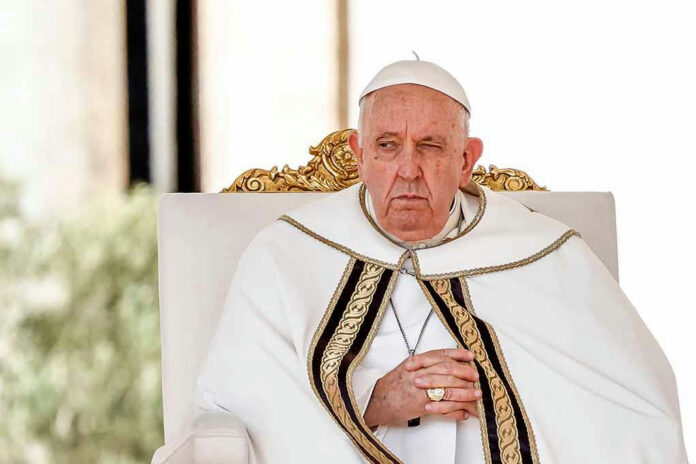
A Vatican tribunal’s routine handling of a fringe petition challenging Pope Benedict XVI’s 2013 resignation is being sensationalized by some Catholic commentators as evidence the Church may be questioning Pope Francis’s legitimacy—a claim mainstream canon lawyers and Vatican watchers flatly reject.
The Petition and Its Claims
Andrea Cionci, an Italian journalist and author of “The Ratzinger Code,” submitted a petition on June 6, 2024, to the Vatican City State Tribunal alongside attorney Roberto Tieghi. The petition argues that Benedict’s February 2013 Latin declaration renounced only the ministerium—the active exercise of papal ministry—rather than the munus, the papal office itself. Cionci’s theory, amplified in traditionalist circles online, suggests Benedict intentionally crafted an invalid resignation to remain pope in a kind of “impeded see” while signaling this through coded gestures and language. Canon law scholars have universally dismissed this interpretation as misreading both Latin terminology and canonical intent, noting that Benedict’s statement explicitly declared his decision was made “in full freedom,” satisfying canon 332’s requirements for a valid resignation.
Vatican’s Procedural Response
Alessandro Diddi, the Vatican’s Promoter of Justice, sent a letter to attorney Tieghi on March 30, 2026, confirming that the petition is in a “preliminary investigative phase” and denying access to case documents during this stage. The language is standard for any filed petition, regardless of merit or admissibility. Diddi’s office must process submissions to the tribunal according to established procedure, even when claims fall outside its competence. Questions of papal legitimacy and canonical doctrine properly belong to the Holy See’s Dicastery for the Doctrine of the Faith, not the Vatican City State Tribunal, which handles civil and criminal matters within the micro-state. The procedural acknowledgment does not indicate the tribunal has judged the petition’s substance or that Church authorities are reconsidering the validity of Benedict’s resignation.
Media Amplification and Expert Pushback
Some commentators in traditionalist Catholic media, including personalities like Patrick Coffin, seized on Diddi’s letter as confirmation that “the Vatican is investigating whether Benedict was still the real pope.” This framing appeared in various podcasts and YouTube segments, suggesting Pope Francis’s legitimacy might be in genuine canonical question. Major Catholic news outlets including Zenit, The Pillar, and The Catholic Herald quickly published detailed clarifications. Canon law experts emphasized that no serious ecclesiastical authority has ever challenged the resignation’s validity; Benedict himself affirmed it repeatedly before his 2022 death, and the College of Cardinals universally accepted it, convening the conclave that elected Francis. The consensus remains that Benedict’s resignation met all canonical requirements and that any contrary narrative remains a fringe theory without institutional support.
Historical Context and Unprecedented Nature
Papal resignations are rare but not unprecedented in Church history. Popes Pontian, Silverius, John XVIII, Benedict IX, and Gregory XII all resigned, the latter to help end the Western Schism in 1415. Canon law codified in 1983 requires only that a papal resignation be made freely and properly manifested; no acceptance by anyone is needed. Benedict’s February 11, 2013, declaration cited declining health and age, renounced the “ministerium of Bishop of Rome” effective February 28, 2013, and was immediately accepted by the Church without objection from any cardinal or curial office. His adoption of the unprecedented “Pope Emeritus” title and continued residence in the Vatican generated some confusion among lay faithful, but ecclesiastical authorities consistently affirmed that only one man holds the papal office at a time. No modern precedent exists for a private citizen’s judicial challenge to a papal resignation after universal acceptance and a subsequent conclave—making Cionci’s petition an anomaly that attempts to formalize a conspiracy-like narrative within official Vatican legal channels.
The Broader Ecclesial Debate
The petition’s sensationalized coverage reflects deeper divisions within the Catholic Church over Pope Francis’s pontificate. Online “resistance” communities, some motivated by opposition to Francis’s perceived liberal reforms, have proven receptive to narratives suggesting his election was defective or that Benedict remained pope in hiding. Cionci’s work systematized these claims into a purported canonical framework, alleging a “Ratzinger Code” of secret signals. Yet these theories collapse under scrutiny: Benedict publicly denied them, affirming Francis as pope; canon lawyers reject the munus-ministerium distinction as legally meaningless in context; and the Church’s universal acceptance of Francis’s election carries enormous ecclesiological weight. The Vatican tribunal’s handling of this petition will likely result in dismissal for lack of jurisdiction or admissibility, but the episode underscores how procedural language can be weaponized to sow doubt and confusion among faithful already distrustful of institutional Church leadership under Francis.
Sources:
Pope Benedict XVI’s resignation: Vatican examines petition challenging validity
Online claims of Pope Benedict’s resignation misread Vatican legal procedure
Resignation of Pope Benedict XVI
Is a Vatican office investigating Pope Benedict’s resignation?