

The most striking fact is this: a man who shot a police officer at an ICE facility now sits on a 100-year sentence, while his Antifa-linked supporters allegedly turn their anger toward the very judges who put him there.
Story Snapshot
- Federal prosecutors say a North Texas Antifa cell turned a July 4 protest at a Prairieland ICE center into a violent ambush.
- Juries convicted the ringleader, Benjamin Song, of attempted murder and material support for terrorists, leading to a 100-year sentence.
- Supporters call the group “Prairieland 19” and claim they are book-club activists, not terrorists, blaming politics for the harsh time.
- The clash over these sentences exposes a bigger fight over how America defines domestic terrorism and protects judges under attack.
The Prairieland Attack And Why Prosecutors Called It Terrorism
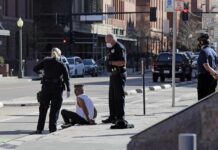
Federal prosecutors say the Prairieland ICE detention center in Alvarado, Texas, was not the scene of a simple protest that got out of hand, but a planned violent attack by a North Texas Antifa cell. According to the indictment and trial record, members showed up on July 4, 2025 with fireworks, weapons, and explosives, vandalized vehicles and a guard structure, and then escalated when law enforcement arrived. The United States Department of Justice says Benjamin Hanil Song fired the shot that hit an Alvarado police lieutenant in the neck.
The officer survived after being airlifted to a hospital, but that single bullet changed the legal stakes dramatically. A federal jury later convicted nine defendants of rioting, using weapons and explosives, and providing material support to terrorists. Song alone was convicted of attempted murder of officers and employees of the United States and of discharging a firearm during a violent crime. Those terrorism-related counts turn on a key federal idea: “material support” for terrorism, which allows prosecutors to treat domestic actors like terrorists even without a specific domestic terrorism statute.
How A Protest Turned Into A 100-Year Sentence
The Justice Department says most of the Antifa cell looked to Song as their leader; he bought firearms, distributed them, and recruited members through gun range sessions and combat training. At trial, jurors saw body camera footage where, just before the shooting, Song can be heard yelling “Get to the rifles” as officers arrive on scene. Prosecutors framed this as an ambush, not a panic response. When the verdict came, Song stood alone on the most serious charge: attempted murder of a police officer and correctional officers, plus firearm and explosives counts.
Those convictions opened the door to heavy federal sentencing tools. Under terrorism enhancements in the federal guidelines, crimes “calculated to influence or affect the conduct of government by intimidation or coercion” can be treated far more harshly than ordinary violent offenses. The judge ultimately gave Song 100 years in prison, while seven co-defendants received decades-long terms, totaling roughly 450 years among them. For many Americans who still believe shootings of police and attacks on detention centers must draw clear, hard lines, this looked like the law finally catching up with masked extremists who had been playing with fire for years.
The Counter-Narrative: Book Club, Misgendering, And Claims Of Political Revenge
On the other side, defense lawyers, left-leaning media, and some legal scholars paint a very different picture. Defendants testified they were part of something called the Emma Goldman Reading Society, a book group named after an anti-fascist writer, and denied any firm Antifa ties. Song’s family said he fired because he feared the officer would shoot an unarmed, fleeing protester, not because he set out to murder a cop. Supporters refer to them as the “Prairieland 19,” insist the event started as a “noise demonstration,” and frame the case as a Trump-era crackdown on dissent.
Critics also attack how the government proved terrorism intent. They say prosecutors leaned on cultural artifacts—tattoo flash sheets, zines with edgy titles, and “mutual aid” activities—rather than clear plans to bomb buildings. Georgetown Law professor Paul Butler called the sentences “extremely harsh” and claimed they exceed punishments for many January 6 rioters and even some murder cases. Civil rights advocates highlight that some transgender defendants were misgendered and held in male facilities, arguing this shows bias and fuels the narrative that ideology, not justice, drove the result. For conservatives, that line of argument ignores the concrete facts: guns, explosives, a wounded officer, and a jury’s guilty verdict.
Domestic Terrorism Without A Domestic Terrorism Law
This fight over labels is not happening in a vacuum. Federal law does not include a standalone crime called “domestic terrorism.” Instead, prosecutors use material support statutes, firearms charges, and sentencing enhancements to treat violent political acts as terrorism when they target government or law enforcement. In the Prairieland case, officials relied on material support to terrorists under 18 United States Code section 2339A and then argued that the attack met the definition of a “federal crime of terrorism.”
That approach worries civil libertarians, who fear the same tools could be turned against other protest movements. A legal explainer notes that these material support laws were originally aimed at international terrorist organizations, but now reach domestic actors with broad, often vague definitions. Harvard Law Review scholars warn that stretching terrorism statutes to cover domestic cases can create a “crisis of legitimacy,” where citizens start to see prosecutions as political weapons rather than neutral enforcement. From a common-sense conservative view, the real test is simple: did people arm up, coordinate, and attack officers doing their job? At Prairieland, the evidence and the jury say yes.
Final sentencing phase begins for Antifa terrorists involved in 2025 Alvarado ICE center attack, assault on officer https://t.co/Lzz9DD3TKg#Antifa #Texas #Alvarado #ICE
— Zed Toppel (@ZToppel78281) July 1, 2026
Threats Against Judges And What Comes Next
Whenever the government treats a case like this as terrorism, the blowback is fierce. Supporters of the Prairieland defendants now rail against the judges and prosecutors who handled the trial and sentencing, and online rhetoric from Antifa-aligned accounts regularly targets the bench as tools of “fascism.” Federal judges already face rising threats whenever they preside over politically charged cases, and a terrorism verdict against Antifa-linked defendants raises the temperature even more. If threats cross the line into intimidation or violence, they do not become “speech”; they become crimes.
For readers who back law and order, the Prairieland story is a warning and a test. It shows how fast a “protest” can turn into an armed clash, how the lack of a domestic terrorism statute pushes prosecutors into creative but controversial legal strategies, and how judges who enforce long sentences can become targets themselves. The core facts remain: a police officer was shot, federal officers were allegedly targeted, and a jury convicted. The debate now is whether we still have the backbone to defend those verdicts—and the people who delivered them—when extremists decide to push back.
Sources:
thegatewaypundit.com, justice.gov, en.wikipedia.org, youtube.com, facebook.com, extremism.gwu.edu, legal-forum.uchicago.edu