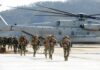


The United States closed its Iraq chapter of Operation Inherent Resolve as the last coalition forces and equipment rolled out of Erbil Air Base on September 30, 2026.
Story Snapshot
- Pentagon and Central Command said the Iraq mission formally ended with the Erbil departure.
- The exit matched the 2024 U.S.-Iraq timetable for transition by end of September 2026.
- Coalition combat operations give way to a normal, bilateral defense relationship with Baghdad.
- The 12-year Iraq phase of the anti-Islamic State campaign that began in 2014 is now closed.
What Ended, Where It Ended, and Why It Matters
U.S. Central Command confirmed an orderly departure of U.S.-led coalition personnel and equipment from Erbil Air Base, marking the formal end of the coalition’s military mission in Iraq. Pentagon statements tied the close of operations to that exit and said Iraqi forces now hold the lead for security. This move capped a 12-year mission that started in 2014 to defeat the Islamic State’s territorial claim in Iraq, and it finished on the schedule set with Baghdad in 2024.
The United States described the shift as a planned handoff, not a sudden retreat. The framing stressed a move from a wartime coalition to a normal defense relationship between Washington and Baghdad. That means Iraqi Security Forces and Kurdish Peshmerga take the front line at home, while the United States supports through channels that look like any standard partner program. That structure reflects how previous counterterror campaigns have wound down once local forces could hold ground.
The Timetable and the Finish Line
The end date matched a joint U.S.-Iraq roadmap set two years earlier. That plan called for wrapping up coalition operations in Iraq by the end of September 2026. Central Command’s completion of the Erbil departure met that line almost to the day. Outlets across the region reported the same sequence: statements from the Pentagon, confirmation that forces and kit left Erbil, and a clear on-ramp into a bilateral defense phase with Iraq in the lead.
Erbil Air Base served as the visible marker of closure for many observers. Reporting described the removal of personnel and equipment as “orderly,” with Iraqi authorities assuming full responsibility for the site’s security role. This is the classic sign of a negotiated transition: tell the public what is ending, show the physical exit, and point to the local force that now owns the job. That visible handoff is how you reduce confusion in a country that has seen many foreign uniforms.
What Continues After the Coalition Flag Comes Down
The coalition’s Iraq combat mission closed, but the United States-Iraq security relationship did not vanish. Officials described the next phase as a normal, country-to-country defense tie. Expect more advising, more information sharing, and training events rather than big combat formations. That is how you protect gains without living on a base. It also aligns with American conservative priorities: finish the job, reward capable partners, and avoid open-ended deployments with unclear goals.
Trump on Truth.
Today, I am pleased to announce, that the last American Forces are leaving Iraq! It has been a long time, with very bad decision-making that got us involved in this quagmire in the first place, but soon, that will be part of History. This is a Great Day for… pic.twitter.com/4qlDeiaeAW
— 𝘿𝘾 𝙇𝙞𝙙𝙨𝙩𝙤𝙣𝙚 (@DcLidstone) September 30, 2026
Some asked if the wider Combined Joint Task Force that handled both Iraq and Syria continues elsewhere. Reporting focused on Iraq and the Erbil exit, and stated that Iraq now leads its own security and that the coalition’s Iraq mission ended. The public line sets a bright, simple truth for everyday readers: Iraq’s mission closed on schedule; Iraqis now lead; the United States supports as a normal partner rather than as an occupying force or a wartime coalition.
What This Means for Iraq and for America
Iraqi leaders gain space to govern and own their security wins. That helps with legitimacy at home and reduces the bullseye on foreign troops. For America, this closes a long chapter and frees resources for higher priorities while keeping ties that deter terrorists from regrouping. That balance is the conservative sweet spot: end the mission cleanly, keep pressure on threats, and let partners carry their load. The Pentagon’s statement framed exactly that outcome.
Sources:
facebook.com, iranintl.com, einpresswire.com, kurdistan24.net, intellinews.com