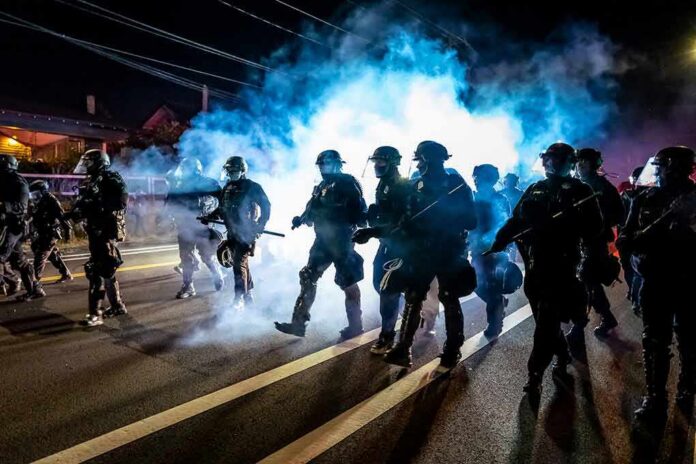
Riot police shoved through a human chain of teenagers outside a Paris high school this week, one scene in a nationwide student revolt that has shut down hundreds of French schools.
Quick Take
- French high school students are protesting overcrowded classrooms, teacher shortages, and crumbling school buildings.
- Reports put the number of affected schools anywhere from roughly 400 to 1,800, with the movement spreading from Paris to Lyon, Marseille, Nantes, and other cities.
- Police have fired tear gas and used riot shields at school entrances, and hundreds of people, many of them minors, have been arrested.
- Prime Minister Sébastien Lecornu has ordered ministers to address the students’ top demands, including teacher replacements and shorter school days.
What Started The Unrest In French High Schools
The protests began at a single school, Lycée Saint-Exupéry in Créteil outside Paris, after a teacher strike over missing staff in mid-September. Students organized a blockade. Within about ten days, that local action grew into one of the largest protest movements France has seen in years, with more than 1,000 student-led demonstrations recorded nationwide between late September and early October.
Students say their classrooms are packed too full, teachers are chronically absent, and school buildings are falling apart. Reuters and other outlets reported students “have voiced anger over overcrowding in classrooms, regular shortages of teachers and dilapidated buildings.” Many also complain their school days run far too long, stretching from early morning into early evening.
Paris Streets Become A Flashpoint As Police Move In
Images from eastern Paris showed anti-riot police with shields pushing back a crowd that had formed a human chain and blocked a road near a school. That confrontation became a defining symbol of the week, showing how quickly a dispute over classroom conditions turned into a street-level standoff between teenagers and law enforcement.
The clashes were not confined to the capital. In Marseille, Nantes, and Lyon, street protests started peacefully mid-morning before tensions rose later in the day, according to Reuters reporting from October 6. By that point, the student movement had spread into a genuinely national crisis rather than a Paris-only story.
Lyon Joins The Wave Of School Blockades
Lyon emerged as one of the key cities where demonstrations escalated, with students joining blockades and street confrontations alongside their peers in Dijon and Strasbourg. The BBC reported that the wave of school protests, which began in Paris, “escalated to cities including Dijon, Lyon, Strasb[ourg]” as arrests and injuries climbed nationwide.
Detailed, Lyon-specific accounts remain limited compared to the heavy coverage out of Paris. Most reporting folds Lyon into the broader national picture rather than breaking out local school names, exact crowd sizes, or city-specific police actions, though video from the city shows students facing police lines and tear gas during the unrest.
How Big Is This? The Numbers Keep Shifting
Counting the scope of the disruption has proven tricky, because figures vary by outlet and by date. One student union reported protests disrupting 1,800 high schools by October 6. Earlier in the unrest, other outlets cited roughly 400 schools closed or affected. The gap reflects how fast the movement grew over just two weeks.
Officials have confirmed hundreds of arrests, most involving minors, along with dozens of injuries among students, staff, and police. The numbers point to a protest movement that outgrew its original single-school roots far faster than authorities anticipated, forcing a national response instead of a local one.
Government Response Mixes Concessions With Crackdowns
Education Minister Édouard Geffray acknowledged that some student demands are legitimate, even as police kept using tear gas and riot gear against crowds. Prime Minister Lecornu directed ministers to tackle the students’ leading demands, including replacing absent teachers and reviewing school-day length.
That mix of partial concession and continued force captures the government’s bind. Admitting the grievances are real without fully meeting them risks prolonging the standoff, while heavy policing risks making arrests and injuries the headline instead of the classrooms and teacher shortages that started it all.
French students are continuing nationwide protests over education conditions, with demonstrations reported in several cities and school blockades disrupting classes. In Lyon, police used tear gas as tensions rose during protests, while students in Paris blocked access to several… pic.twitter.com/sVHI0P1gKJ
— Ocean News (@OceanNewsUK) October 6, 2026
What began as one blockade at a suburban Paris school has become a test of whether the French government can fix real problems in its schools before street confrontations become the lasting image of this fight.
Sources:
san.com, dw.com, yahoo.com, aa.com.tr, nypost.com, indianexpress.com