One three-minute invocation with “Hail Satan” turned a routine Iowa council meeting into a constitutional stress test.
Story Snapshot
- Ottumwa’s council let a former member give an invocation that ended with “Hail Satan.”
- The city had a neutral invocation policy and scheduled the speaker in advance.
- A local pastor called the prayer a “curse” and urged leaders to undo it.
- The meeting video shows the invocation as part of normal opening business.
What actually happened at City Hall
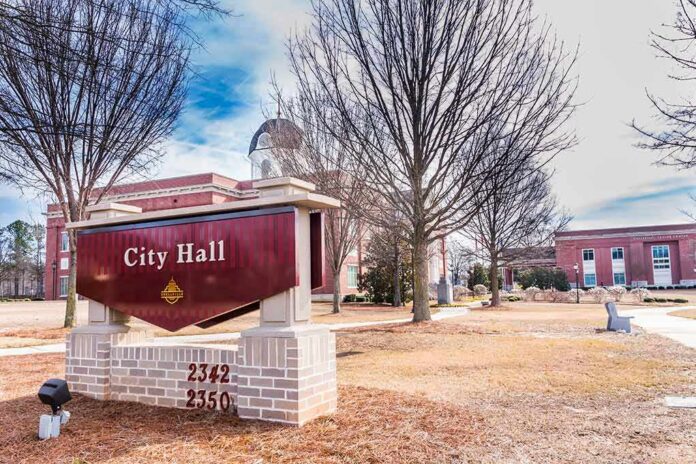
Ottumwa’s October 6 council meeting began with a scheduled invocation by former council member Matt Dalbey. He used language like “Dear dark father” and closed with “Hail Satan,” which drew loud reaction in the chamber. The official city video confirms the prayer occurred during the regular opening sequence before the pledge and roll call. The uproar that followed included calls from the floor and a request for a moment of silence from the dais.
Local reporting identified Dalbey, a city resident and ex-council member, as the speaker approved for that date. Coverage also noted he was listed on the city’s invocation schedule and, at one point, was expected to return on November 3. City officials said the policy does not let them screen content ahead of time, and they do not endorse any invocation’s message. That framing explains why his remarks proceeded under the same rules used for other prayers.
The rulebook behind the firestorm
Ottumwa adopted an invocation policy earlier in the year to open meetings with a brief religious or philosophical statement. The city framed the practice as viewpoint-neutral access, not government approval of any faith. That approach tracks how federal courts have treated legislative prayer since the Supreme Court’s Greece v. Galloway decision, which permits invocations if a city does not favor one belief over another. Neutral rules create access for many voices, including controversial ones.
Cities that invite prayers live with a trade-off: neutrality means a broad door. That is why the Satanic Temple often seeks invocation slots nationwide. Courts have allowed councils to use structured, even invite-only systems, but warned against ad hoc gatekeeping that looks biased. The Boston litigation shows the line: the council survived suit because the process, while messy, did not prove targeted exclusion. Ottumwa’s stated policy tries to avoid that trap with open criteria.
The clash in the room: prayer, protest, and prudence
Pastor Rick Bick stood up after the invocation and asked leaders to “reverse this curse that was put on our city,” adding, “That ‘Hail Satan’ is not welcome here.” His objection captured how many residents felt. From a common-sense, conservative view, elected bodies exist to serve families, not to platform shock rituals. Yet once a council opens an invocation forum and vows neutrality, it cannot yank the mic when a viewpoint offends the majority. That is the legal bind.
Chaos Erupts After Iowa City Council Meeting Opens with "Hail Satan" Invocation 😲👇
A city council meeting in Ottumwa, Iowa completely derailed this week after former councilman Matt Dalbey took the podium for the opening prayer. Dalbey, a member of the Satanic Temple of Iowa,… pic.twitter.com/zcmyIweR8d— Hatton, America is back (@jnottah) October 8, 2026
Council members faced two immediate risks: public trust and legal exposure. Condemning the speech from the dais might soothe the room but invite claims of hostility toward a protected belief. Letting it pass without comment might look like endorsement. The mayor’s move to pivot to silence and get to the agenda reflected a classic damage-control tactic in such moments. The longer fix is policy clarity that honors faith traditions without turning meetings into culture-war theater.
Where cities go from here
Practical steps exist for governing adults. First, narrow the purpose: invocations should solemnize the work of the council, not proselytize or provoke the audience. Second, lock in neutral, objective eligibility tied to local presence and a consistent format. Third, publish the roster and rules so the public knows the city is not playing favorites. Fourth, bar audience responses during the invocation to prevent live point-counterpoint showdowns that hijack civic business.
Citizens have choices, too. If residents want faith at the start of meetings, they must accept viewpoint neutrality’s costs. If they do not, they can press leaders to replace invocations with a moment of silence for all. That option reduces spectacle and keeps the focus on potholes, budgets, and policing. Ottumwa’s video shows how fast a city can lose control when ritual turns to rally. Stable rules and steady chairs keep the people’s work first.
Sources:
thegatewaypundit.com, thepostmillennial.com, latestly.com, zerohedge.com