

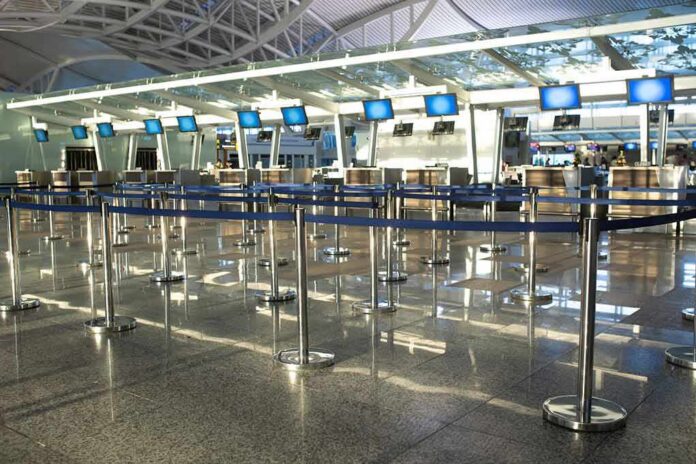
Riyadh’s main airport took missile fire, three Saudis died, and flights halted as smoke rose over the capital.
Story Snapshot
- Houthi forces said they struck King Khalid International Airport in Riyadh with missiles.
- Saudi aviation officials confirmed deadly strikes, facility damage, and a hit on a Saudia aircraft.
- Airlines canceled or diverted flights as service recovered in stages afterward.
- The attacks capped several days of airport strikes across Riyadh and Abha.
Riyadh’s Airport Hit And Flights Disrupted
Saudi Arabia’s General Authority of Civil Aviation said two strikes hit King Khalid International Airport on October 9. The first strike targeted airport facilities. The second hit a Saudia Airlines aircraft on the ground. The authority reported three Saudi nationals killed and injuries to others of different nationalities. Witnesses described explosions, evacuations, and smoke at the airport. Media images showed emergency response and disrupted operations as airlines paused service.
Reuters reported visible smoke over the airfield and damage to the Saudia jet. Several airlines canceled flights to Riyadh. Flight tracking later showed operations resuming step by step as the airport restored service. The sequence matched a familiar pattern: a sudden stop, a tense wait, then a careful restart as teams checked runways and gates for hazards.
Houthi Claim Of Responsibility And Strike Pattern
Houthi military spokesman Brigadier General Yahya Saree said the group launched ballistic and cruise missiles at Riyadh and Najran airports, and that air traffic was disrupted. He linked the attack to ongoing conflict with Saudi forces. The Associated Press noted the Houthi claim that a ballistic missile caused damage at King Khalid International Airport, alongside witness accounts of evacuations and explosions in the terminals.
BBC coverage placed the Riyadh strike within a week of repeated airport attacks. Reports cited deadly incidents at Abha International Airport near the Yemen border on earlier days, followed by the October 9 blast in the capital. The chain of events showed a sustained effort to pressure Saudi air travel and public life, not a one-off provocation.
What Officials Confirmed And What Travelers Faced
Saudi civil aviation officials gave hard details that matter most to the public: where the strikes landed, how many were killed, and what was damaged. They confirmed fatalities, injuries, damage to airport facilities, and a Saudia plane struck on the ground. They did not name who carried out the attack. On the concourses, travelers faced sudden evacuations, boarded-up gates, and missed connections as airlines reset schedules.
https://twitter.com/EveryBodyH8zLee/status/2109084242210656355
Travelers and crews ride the front edge of these events. One hit can ripple across routes for days. Cancellations pile up, aircraft rotate late, and crews time out. Reuters noted that airlines canceled flights after the attack and that service returned gradually. That pattern fits common-sense risk control: stop first, inspect for threats, then reopen in phases as safety checks clear.
Why This Matters Beyond One Airport
Saudi airports are more than gateways; they are the hubs of a regional economy and the stage for global events. A strike that kills citizens and grounds jets can shake investor confidence, stress supply chains, and force hard choices on air defense priorities. Major outlets reported that the Riyadh hit followed earlier airport attacks, which widened the impact across the week. The conflict crossed a civilian threshold that responsible nations must guard as a core duty.
How The Facts Align With Common Sense
The Houthi claim, witness reports of blasts, and Saudi aviation statements form a consistent picture. The core facts hold: missiles targeted a civilian airport, people died, a Saudi jet was damaged, and flights were disrupted. That through-line tracks with American conservative values on security and deterrence. Civilian infrastructure should never be a battlefield. When it is attacked, leaders owe citizens swift defense, clear communication, and the resolve to prevent a repeat.
What Comes Next For Security And Stability
Airport protection in the region will likely harden. Expect more layered air defenses, tighter approach patterns, and stricter ground-movement controls during alerts. Airlines will keep dynamic risk models and adjust schedules fast when threats rise. The week’s strikes across Riyadh and Abha show how a single campaign can rattle daily life far from front lines. The smart path is simple: shield civilians, keep airports open, and make the cost of firing on them unacceptably high.
Sources:
feedpress.me, apnews.com, reuters.com