The Treasury Secretary sleeping on a U.S. base because Iran wants him dead says more about modern war than any speech.
Story Snapshot
- The New York Times reported Scott Bessent moved to a U.S. military base after Iranian threats.
- Treasury said Bessent will not be deterred and will continue his Iran pressure campaign.
- U.S. officials assessed Iranian plots against Americans had reached advanced stages.
- Bessent has led sanctions and trade pressure designed to isolate Iran financially.
The move: a cabinet official under direct threat
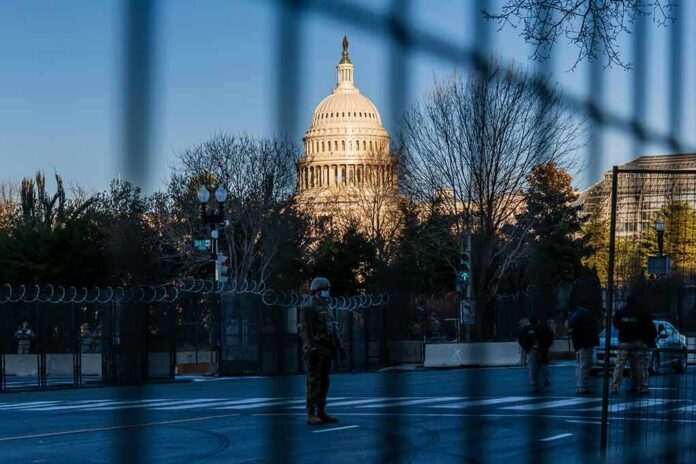
The New York Times reported that Treasury Secretary Scott Bessent left his home and relocated to a U.S. military base after Iranian threats to his life. The report cited three people with knowledge of the move. Reuters relayed the same finding the next day, citing the Times account and a U.S. intelligence memo that warned of advanced lethal plots against Americans. A Treasury spokesperson said Bessent will not be deterred and will press ahead with policy work targeting Iran’s economy.
Officials linked the threat to a recent U.S. intelligence assessment. That assessment concluded Iranian plots against current and former American officials had grown more advanced, and it partly drew on intelligence related to Bessent, according to the Times. Reuters reported a senior administration intelligence memo stating plots against American citizens had reached advanced stages. The reports did not detail operational specifics. That gap is normal when intelligence remains classified and active.
Why Bessent would be a target
Bessent sits at the center of the pressure campaign that Tehran cares about most: money. The Times and Reuters described him as a leading architect of efforts to squeeze Iran through sanctions and trade limits. Sanctions hit the regime’s cash flow, its procurement networks, and the elites who shield them. That pressure often creates blowback. Iran and its security arms have a long record of trying to push back asymmetrically, and they prefer soft targets over open battlefields when they can find them.
Recent Justice Department cases show that pattern. In 2022, the Department of Justice charged a member of Iran’s Islamic Revolutionary Guard Corps with plotting to murder former National Security Advisor John Bolton. In other filings, prosecutors have detailed murder-for-hire and kidnapping schemes tied to Iranian intelligence or its cutouts, including a conviction tied to a 2024 plan to target U.S. officials. These cases do not prove the specifics of the Bessent threat, but they map the playbook.
How modern pressure wars spill into daily American life
Economic pressure campaigns run on ledgers and law, but they land in real lives. When a cabinet official moves onto a base, the line between foreign policy and home front vanishes. That has policy value and risk. It shows resolve. It also forces smart force protection so the work can continue without handing the enemy a propaganda win. The correct response follows common sense and conservative principles: protect the target, harden the system, and keep the policy on track.
🚨 JUST IN: Due to Iranian threats on his life, Treasury Sec. Scott Bessent has MOVED TO A MILITARY BASE — leaving his home — as the plots have entered a "MORE ADVANCED STAGE," per NYT
This is horrible, PRAY FOR SCOTT BESSENT 🙏🏻
— Gigi J. Trump (@realGigiJ) November 11, 2026
Clear priorities guide that approach. First, protect Bessent and his family so they can live and work without fear. Second, double down on disrupting the financial and criminal networks that enable overseas plots. Third, raise costs for any state actor that directs or funds operations on American soil. Fourth, keep Congress informed in classified settings so oversight stays firm and bipartisan. These steps deny Tehran leverage while signaling that threats trigger tighter pressure, not retreat.
Signals, denials, and what actually matters now
Iran has publicly denied plotting attacks on U.S. soil, as news outlets have noted. Denials are standard. Publicly filed American cases already show that Iranian state-linked actors have tried to plan murders and kidnappings tied to U.S. figures and dissidents in recent years. The question that matters most today is not what Tehran says. It is whether the United States keeps its people safe while tightening the vise on the regime’s money channels and enablers.
What to watch in the days ahead
Watch for Treasury to keep rolling out sanctions that dig deeper into front companies, shipping nodes, and foreign banks that mask Iranian transactions. Expect the Federal Bureau of Investigation and the Department of Justice to spotlight any uncovered facilitators inside the United States. Look for allied coordination in Europe and Asia to close the gaps where oil, drones, components, and cash still move. If that happens, the message is simple: threats yield more pressure, not less.
Sources:
townhall.com, reuters.com, politicalwire.com