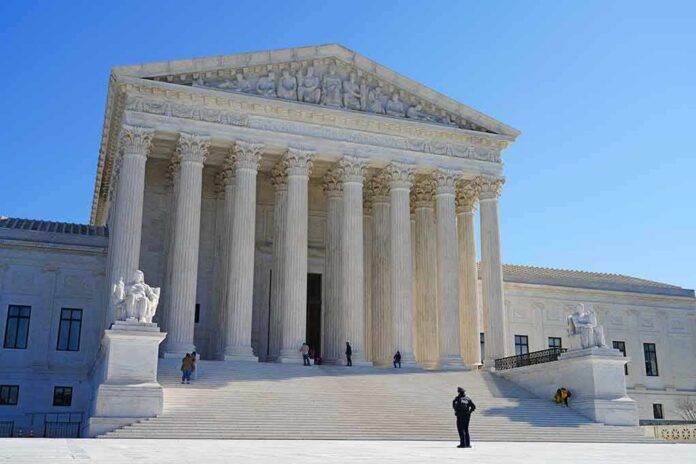
A Utah judge set a firm trial date in the capital case over Charlie Kirk’s killing, moving a high-stakes prosecution into the spotlight and testing whether justice can move faster than politics.
Story Snapshot
- The judge set a trial date after ruling there is probable cause on all seven charges.
- Prosecutors cite campus surveillance video, rooftop movements, and a rifle found nearby.
- The state plans DNA, ammunition, autopsy, and witness evidence; the defense disputes key links.
- Pressure over timing is intense, with national attention and arguments about a speedy trial.
Court Confirms the Case Will Go to Trial
The Utah court advanced the case by finding probable cause and setting a trial date, keeping all seven counts, including aggravated murder, on the table. Prosecutors are seeking the death penalty, which raises the bar for evidence and procedure. The judge’s ruling follows earlier hearings where both sides previewed parts of their cases. The schedule now locks in a path to present the evidence in full. The defense maintains its not-guilty stance and plans to challenge the state’s theory at every step.
Prosecutors say video and physical evidence will show the defendant was on campus and near the shooting site. An agent described footage that places a suspect on a rooftop overlooking the event, then moving toward a wooded area where a bolt-action rifle was recovered. The weapon, wrapped in a towel, reportedly had a spent round with ammunition that carried etched messages, with similar rounds allegedly found at the suspect’s home. The state also points to autopsy findings and witness testimony it plans to introduce.
What the Evidence Could Show — and Where It Is Thin
The state’s preview lists several pillars: surveillance video, a recovered rifle and towel, ammunition with markings, and planned DNA results. Prosecutors argue the shot came from a high-powered rifle into a crowd area, creating a risk to others, which supports aggravated murder. Yet gaps remain in the public record. Reporting has not shown final DNA statistics, toolmark results tying the rifle to the fatal round, or a named eyewitness who saw the trigger pull. Those missing pieces will face scrutiny at trial.
Defense lawyers attack the aggravating-factor claim and the science. They argue the bullet traveled above the crowd, not through it, and say the state has not proven the shooter endangered others at the event. They also challenge any claimed political motive and say the state leaned too much on hearsay in earlier hearings. A defense attorney questioned an analyst’s DNA conclusions, saying there was no match to the questioned samples. So far, the defense has not offered an alternate shooter theory in public filings.
Why Trial Timing Matters for Justice and the Country
The timetable is now set against a backdrop of intense national interest. Coverage stresses the gravity of a high-profile capital case and the need for a fair jury. Public debate over speed has swirled, with some urging a faster schedule and others warning that rushing risks error. Research on pretrial publicity shows it can shape what people think before evidence is heard, which is why jury selection must be careful and thorough to protect the Sixth Amendment.
Charlie Kirk was shot and killed Sept. 10, 2025. Today Tyler Robinson returns to court in Provo, Utah. The judge wants to set a schedule for the case. A trial date may not be set. Time: 1 p.m. MT, per news reports. Robinson is charged and presumed innocent.
— Cassian Creed (@CassianCreed) November 9, 2026
For conservatives, this case strikes a nerve. A leading voice on faith, family, the Constitution, and free speech was killed at a campus event. Supporters want firm accountability without a drawn-out maze of delays. The court has now set a clear path to test the state’s claims in open court. That means the public should demand full transparency of admissible exhibits: the complete video timeline, tested DNA results, ballistic reports, and an authenticated chain of custody, all weighed under the rules of evidence.
How to Track the Facts Without the Noise
High-profile violence often creates two battles: one in court and one in the media. The courtroom must win. Citizens should focus on verifiable items: confirmed surveillance sequences, lab-certified DNA statistics, ballistic toolmarks, autopsy findings, and sworn testimony. They should also watch for defense cross-exams that probe rooftop shell-casing searches, any reporting errors, and the exact steps investigators took to secure and test the rifle and towel. Facts, not speculation, must decide guilt and any sentence.
Next, expect motion fights over what the jury can hear, including expert methods and statements from witnesses. The prosecution carries the burden to prove identity, intent, causation, and any aggravating factor beyond a reasonable doubt. The defense will test each link and press for strict disclosure. With a firm date set, the nation should insist on a trial that is swift, fair, and rooted in evidence. Justice for the victim and due process for the accused both demand nothing less.
Sources:
apnews.com, cnn.com, hjnews.com, nbcnews.com, dcnewsnow.com, abcnews.com, inquirer.com, fox32chicago.com