

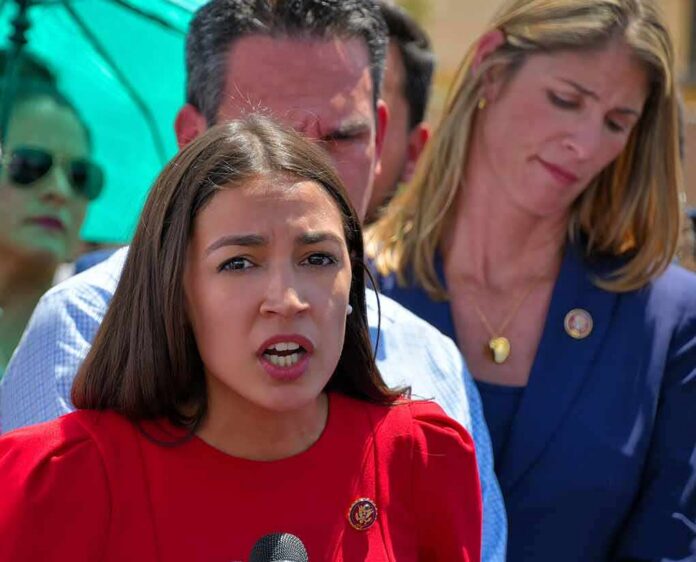
Alexandria Ocasio-Cortez says the decision on a 2028 run comes after the midterms, but she is keeping every door ajar.
At a Glance
- She will decide on 2028 plans after the midterm elections, not before.
- She has not ruled out running for president and is weighing multiple paths.
- Her public comments frame ambition as service, not title chasing.
- Media coverage has already shifted the story into a 2028 horse race.
What She Said And When She Plans To Decide
The New York congresswoman says she will weigh her next step after the midterms. She told the New York Times she will make any such decision then, not now. She has options on the table. She could run for president, seek a Senate seat, or stay in the House. She has not shut the door on a White House bid. She also said she might pursue a Senate challenge, saying anything is possible at this point. She is signaling timing, not a final answer.
Television clips and headlines sprinted ahead of the calendar. Several outlets framed her comments as a marker for a likely 2028 race while repeating that the choice comes after the midterms. She fed the buzz with one line that lingered: life does not wait for you to be ready, an argument for acting when the moment opens. The practical read is simple. She is keeping her options live while her party’s map and mood settle.
What She Has And Has Not Ruled Out
She said she has not ruled out a 2028 presidential run. She paired that with a focus on near-term politics. She urged attention on the midterms over personal plans. That tension fits the role she plays. She uses national attention to press issues and build leverage while saying titles matter less than outcomes. She put it this way months earlier: my ambition is to change this country, not to collect a label. That line leaves the presidential lane open without a promise.
Reports also highlighted a hard-edged caveat. If she runs in 2028 and loses, she suggested she may not seek office again, calling it all or nothing. That stance, if it holds, would raise the stakes. It would also match a brand that leans into high risk and high reward. Voters often say they want clarity. This is clarity about mindset, not yet about the job she will seek.
How The Media Turned A Hint Into A 2028 Plotline
Coverage followed a familiar pattern. Once a figure with national reach hints at “maybe,” the press builds an imaginary primary around them. Outlets move from policy to who is up, who is down, and who might win. That is what political science calls horse-race framing. It puts attention on timing, tactics, and polls rather than on bills, budgets, and tradeoffs. The result is momentum for a story even before a committee forms or papers get filed.
𝐀𝐎𝐂: 𝐈𝐅 𝐒𝐇𝐄 𝐋𝐎𝐒𝐄𝐒 𝐈𝐍 𝟐𝟎𝟐𝟖, 𝐇𝐄𝐑 𝐓𝐈𝐌𝐄 𝐈𝐍 𝐏𝐔𝐁𝐋𝐈𝐂 𝐎𝐅𝐅𝐈𝐂𝐄 𝐈𝐒 𝐎𝐕𝐄𝐑
𝐀𝐥𝐞𝐱𝐚𝐧𝐝𝐫𝐢𝐚 𝐎𝐜𝐚𝐬𝐢𝐨-𝐂𝐨𝐫𝐭𝐞𝐳, 36, just told the 𝘕𝘦𝘸 𝘠𝘰𝘳𝘬 𝘛𝘪𝘮𝘦𝘴 that whatever she runs for in 2028 — her House seat, a Senate bid, or the White… pic.twitter.com/7Vtqf1GTsu
— M.A. Rothman (@MichaelARothman) September 23, 2026
That cycle is not new, but it is faster now. Social clips loop one quote. Commentators add stakes. Readers can forget that no one has declared. Here, the record shows deliberation and delay, not a launch. That distinction matters. It keeps the focus on the one firm fact: she decides after the midterms. It also resets expectations to something closer to common sense. A serious national run needs time, money, and team. Those signals have not surfaced in public filings yet.
Paths, Pressure, And The Conservative Read On The Stakes
Three paths are visible. She can keep her House seat, test a Senate race, or try for the presidency. Each path carries different tests. A Senate run is a statewide case study in building broader coalitions. A presidential run is a nationwide stress test of message and discipline. A House path deepens policy work and committee clout. She has hinted that any move would be purpose-driven. That framing fits her past, but voters will judge the execution, not the speech.
From a conservative lens, the lesson is also clear. Clarity beats coyness. Voters deserve straight talk about goals and tradeoffs. If she runs for president, the bar is high. She must show practical plans that help working families, protect public safety, and respect the limits of government. She must do it without shifting the costs to small businesses and taxpayers. The midterms marker gives her time. It also gives skeptics time to press for details that align with everyday common sense.
What To Watch After The Midterms
Watch for a simple on-the-record choice. Does she say president, Senate, or House? Look for formal steps like an exploratory committee, travel to early states, staff hiring, and fundraising moves. These signals separate talk from action. Until then, the most accurate frame is the one she set. The decision comes after the midterms. The options remain open. The stakes, by her own words, are high enough to make it all or nothing.
Sources:
feedpress.me, nypost.com, washingtonexaminer.com, nbcrightnow.com, cbsnews.com, washingtontimes.com, usatoday.com