
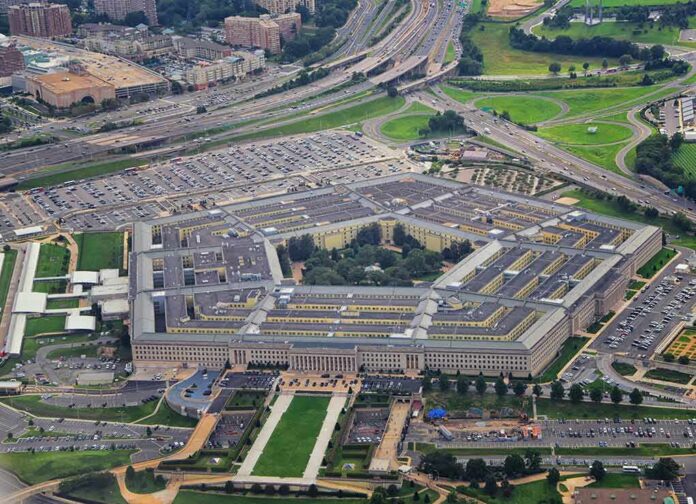
Two YouTubers-turned-boxers walked the halls of the Pentagon last week, stood at the 9/11 memorial, and swapped small talk with the Secretary of War before addressing a room full of American troops.
Quick Take
- Jake and Logan Paul toured the Pentagon last Thursday, visited the 9/11 memorial, and briefly met Secretary Pete Hegseth.
- Deputy Pentagon Press Secretary Joel Valdez confirmed the purpose of the visit in an official statement.
- The Department of War posted photos and video of the event, drawing sharp criticism online.
- The visit fits a broader Pentagon pattern of using celebrities and influencers to reach younger Americans.
What The Pentagon Says Happened
The Department of War confirmed the visit happened last Thursday, with Deputy Pentagon Press Secretary Joel Valdez laying out exactly what took place. “The Department of War was proud to host Jake and Logan Paul at the Pentagon this week,” Valdez said. “They toured the building, paid their respects at our 9/11 memorial, thanked our service members, and briefly met with Secretary Hegseth.”
The Department of War’s own social media account backed up that account days later, posting footage with a simple caption: “Last Thursday, we welcomed Logan and Jake Paul to the Pentagon to meet with our warriors.” The video shows the brothers shaking hands with uniformed service members and standing beside Hegseth, a scene the department clearly wanted the public to see.
Backlash Was Loud And Immediate
Not everyone saw a feel-good moment. The Daily Beast framed the visit as Hegseth trying to “hype up” troops with “MAGA-friendly influencers turned reality stars,” calling it an attempt to have the brothers “lecture” service members. Online reaction split along similar lines, with some mocking the pairing of internet celebrities with military brass as tone-deaf theater rather than genuine appreciation for the armed forces.
Other outlets picked up on the sharper edge of that criticism. One report noted commentators suggesting the Paul brothers should “enlist” themselves rather than offer motivational words to people who actually signed up to fight, with one line landing hard: “losers.” A separate report on fan reaction noted mixed feelings even among the brothers’ own audience, with some fans saying the Pentagon trip felt like a strange departure from their usual boxing and content-creator world.
Part Of A Bigger Recruiting Playbook
This was not a one-off publicity stunt dreamed up on a whim. The Pentagon has leaned into celebrity and influencer visits for years as part of a broader push to connect with younger Americans who don’t watch cable news or read press releases. Hegseth himself has made troop visits, including trips abroad and closer to active combat zones, a regular feature of his tenure as Secretary of War.
Whether that strategy works is a fair question, but it’s not a new one. Military leaders have openly credited influencer partnerships with helping recruitment numbers among Generation Z, a demographic that traditional advertising struggles to reach. Bringing in figures with tens of millions of combined social media followers, whatever one thinks of their résumés, puts footage of troops and the Pentagon in front of audiences the military otherwise can’t touch.
Logan and Jake Paul visit the Pentagon
Logan and Jake Paul toured the Pentagon and addressed military personnel, with the brothers also meeting Defense Secretary Pete Hegseth.
Read full article herehttps://t.co/1femaG5fNd
Source: Department of Defense#WWE #LoganPaul… pic.twitter.com/kE6nf36v0c
— Wrestling Observer (@WONF4W) September 21, 2026
Critics calling the visit an “embarrassment” are entitled to their opinion, but the underlying complaint seems less about facts and more about taste. Nobody disputes that Jake and Logan Paul toured the building, honored the fallen at the 9/11 memorial, or met troops and Hegseth briefly. The real disagreement is whether celebrity outreach cheapens the military’s image or simply modernizes how it talks to a generation raised on smartphones instead of newspapers.
For a Pentagon trying to fill recruiting quotas in a competitive labor market, betting on name recognition isn’t reckless. It’s a calculated trade-off: a little bit of internet snark in exchange for millions of eyeballs on troops who rarely get that kind of attention. Whether history judges it as savvy or silly probably depends less on the visit itself and more on whether it actually moves the needle on enlistment down the road.
Sources:
taskandpurpose.com, x.com, yahoo.com