

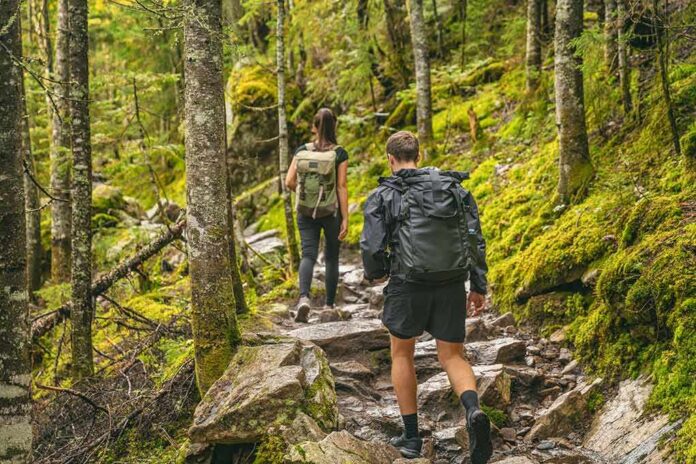
A New York City mother hiking to Havasu Falls was slashed in the neck and hand, then saved when a porch light flipped on and her attacker ran.
Story Snapshot
- A 27-year-old tourist was assaulted on the Havasupai Reservation; a Ring camera reportedly captured the attack.
- Police identified the suspect as Taylor Nardo Paya, a Havasupai Tribe member, and arrested him the next day.
- Federal authorities charged him with assault with a dangerous weapon in Indian country.
- The victim survived and is recovering at home in New York, according to family.
A violent ambush on a world-famous trail
Reporters say the attack happened on the hike to Havasu Falls, a remote, steep trail in northern Arizona. The victim told family that a man came up fast and cut her throat. She also suffered wounds to her hand while fighting back, which tracks with defensive injuries. A nearby home’s Ring camera recorded key moments, according to local outlets. A resident stepped out, the attacker fled, and that split-second scare likely spared her life.
The suspect’s name is Taylor Nardo Paya. Local reports describe him as a member of the Havasupai Tribe. Authorities tracked a stolen phone to help identify and locate him, then made the arrest the following day. The victim’s family said she returned to New York to heal with her children. They also shared her words from the struggle: “I can’t die like this.” That plain sentence shows the terror far better than any police jargon could.
Why a federal charge followed on tribal land
Prosecutors charged assault with a dangerous weapon in Indian country. That charge aligns with how serious crimes on reservations often move to federal court. The Major Crimes Act gives federal authorities jurisdiction over major offenses in Indian country when conditions fit. Federal Bureau of Investigation materials and Department of Justice charts place “assault with a dangerous weapon” on that list. The setting on Havasupai land explains the federal track rather than a state case.
Tribal, federal, and sometimes state roles overlap in these cases. Federal Bureau of Investigation guidance notes that agents work with tribal police on major crimes such as homicide, kidnapping, and serious assaults. That joint posture can speed an arrest even in remote terrain. It also means updates tend to flow from multiple agencies, not one sheriff’s office. That is normal in Indian country cases and does not change the core facts of this attack.
A suspect with a criminal record and a victim who fought to live
Coverage cites court documents showing a prior robbery conviction for Paya, with a guilty plea and a five-year sentence several years ago. That history does not decide this charge, but it informs risk. Voters who value safe communities and real accountability will see a clear duty: enforce the law fast, protect victims, and keep violent offenders off the street when probable cause is strong. That is common sense, not partisanship, and it honors equal protection under the law.
The victim’s quick thinking and the Good Samaritan’s presence changed the outcome. The human factor mattered more than any system at that moment. A porch light, a door opening, a neighbor’s glance—those tiny cues turned a predator into a runner. Tourists often picture Havasu Falls as a dream of turquoise water. They still should. But a dream hike also needs basic caution: hike in pairs, keep phones secured, and note homes and trail spurs where help may be near.
Safety on the Havasupai trail and the road ahead
The Havasupai Reservation requires permits and gives visitors clear rules on travel, camping, and respect for the land. The tribe’s guidance stresses preparation, hydration, early starts, and staying on marked paths. Those tips limit injury and exposure in a canyon where rescues are hard. None of that guarantees safety from a violent person, but strong norms and steady enforcement stack the odds in favor of families who plan well and move smart.
A 27 year old female hiker from New York was stabbed and robbed by Taylor Nardo Paya on the Havasupai Indian Reservation in the Grand Canyon on Wednesday, August 12, 2026. The attack was caught on a Ring doorbell camera. https://t.co/Tw1y3giR1d
— Populo Iratus (@astronomy89) August 20, 2026
Federal agents and tribal police now own the next steps. The charge signals a serious file, and the arrest indicates speed and coordination. Courts will sort the evidence. The victim will keep healing. The lesson for the rest of us is simple: beauty and danger often share a fence line. Respect the place. Respect the people who live there. Travel prepared. And when something looks wrong, step into the light—because sometimes that is exactly what saves a life.
Sources:
nypost.com, fox10phoenix.com, nbclosangeles.com, help.havasupaireservations.com, fbi.gov, news.azpm.org