
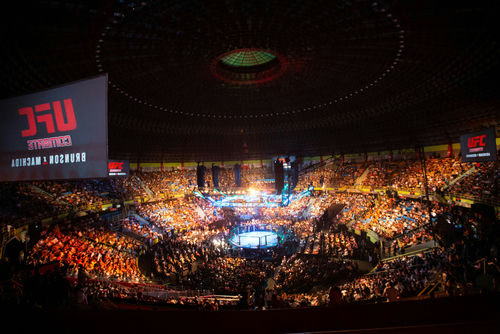
One phone call, one deleted app, and one federal indictment turned a Chicago man into the face of a White House plot case that may still hinge on what investigators can prove, not what headlines imply.
Quick Take
- Alexander Iniguez Mercado was charged with obstruction of justice tied to an alleged violent plot around a White House Ultimate Fighting Championship event.
- Prosecutors say he helped administer Signal groups used to discuss the plan, then removed the app after an Federal Bureau of Investigation (FBI) call.
- The government says the deleted data became unavailable, which is why the case centers on evidence handling as much as intent.
- The defense says the chat was about survivalism and camping, not terror, and Mercado reacted badly to an offhand comment.
How the Case Reached Federal Court
Federal authorities say Mercado was one of eight people charged in connection with the alleged plot. Prosecutors say the group discussed a violent attack aimed at the June 14 UFC event at the White House, and they say Mercado served as an administrator and member of Signal messaging groups used in that planning [3][8]. The charge against him is obstruction of justice, which carries a maximum sentence of 20 years if he is convicted [3][4].
The detail that gives this case its edge is not just the alleged plot. It is the sequence. According to the indictment and Department of Justice statement, an FBI agent called Mercado the day before the event to ask about online threats, and Mercado denied plans to travel to Washington, District of Columbia, and refused to meet. Prosecutors say he then uninstalled Signal right after the call, which left message data unavailable [3][7].
The Evidence Fight Behind the Headline
That sequence matters because obstruction cases often live or die on timing. If prosecutors can show Mercado knew investigators were closing in and then wiped access to relevant messages, they have a cleaner story for the jury. If the defense can show the app removal had another reason, or that the chats were not about violence, the government’s case becomes harder to sell [3][4].
The government’s public version is blunt: the indictment says Mercado allegedly warned a high-level co-conspirator that the FBI was investigating them. It also says the broader case involved drones, sniper rifles, and explosives aimed at government officials and attendees [3][8]. Those are serious allegations, but they are still allegations. That distinction matters in any federal case, and it matters even more when fear starts doing the talking before the evidence does.
The Defense Is Trying to Cut the Plot in Half
Mercado’s defense has taken a different path. It says he “freaked” after an offhand survivalism comment in the chat, and it argues the group was focused on camping and survivalism rather than terrorism [1][3]. That is not a small detail. If a chat starts as rough prepper talk and only later gets folded into a criminal theory, jurors may have to decide whether prosecutors are proving intent or simply reading menace into messy conversation.
The defense still faces a hard problem. It has not publicly produced message logs, forensic records, or witness testimony that directly undercut the government’s account of Mercado’s role as a Signal administrator [1][3]. The result is a familiar split in major federal cases: the government has the paper trail it seized, while the defense must argue about what that paper trail really means, and what it does not prove.
Alexander Iniguez Mercado, 20, faces up to two decades in prison if convicted of the obstruction of justice charge in a grand jury indictment made public Friday. He was set to appear before a federal magistrate judge later Friday afternoon. https://t.co/DHDosj9O2T
— Chicago Sun-Times (@Suntimes) June 26, 2026
Public reaction has already raced ahead of the courtroom. News coverage and social posts tend to compress the case into a simple label: terror plot, arrest, guilt. That is useful for clicks and dangerous for judgment. A federal indictment is not a verdict, and a deleted app is not the same thing as a proven conspiracy. The facts here are serious enough without adding sloppy certainty to them.
For readers who care about due process, the real test is narrow and important. Can prosecutors prove Mercado knowingly obstructed an investigation tied to a violent plot, or will the defense persuade a jury that he was reacting to talk he did not support? The answer will matter far beyond one Chicago defendant, because federal terror cases often shape how future charges get framed, defended, and understood.
Sources:
[1] Web – Chicago Man Charged with Obstructing Justice in Foiled White House UFC …
[3] Web – Twenty-year-old Alexander Iniguez Mercado of Chicago is charged …
[4] Web – Chicago man accused of running Signal group used to plan alleged …
[7] Web – Ben – Twenty-year-old Alexander Iniguez Mercado of Chicago is …
[8] Web – [PDF] RECEIVED – Department of Justice