

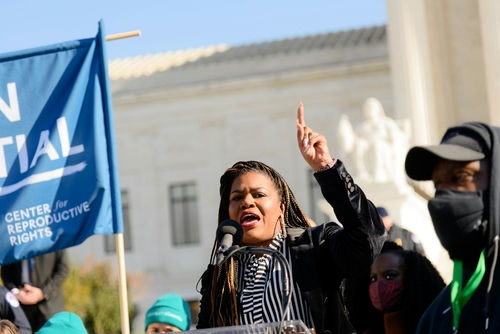
A Chicago speaker’s viral takedown of Democrats’ “voting rights” outrage exposes a gap between headline fury and real-world consistency, challenging a narrative many media outlets treat as settled fact.
Democratic Condemnations And The Court’s Voting-Rights Shift
Illinois Democrats in state offices and on Capitol Hill publicly denounced a recent Supreme Court decision, arguing it significantly weakens the Voting Rights Act and harms minority voting protections [1]. Reported reactions framed the ruling as a major setback for fair representation, fueling a wave of statements and media hits. The same coverage referenced litigation over congressional district design, with critics pointing to implications for majority-Black political influence. The intensity of the pushback highlighted how voting-rights disputes drive party identity and mobilize core constituencies [1].
Chicago’s viral speaker tapped into this tension, ridiculing claims that access is broadly suppressed and urging Democrats to address everyday failures rather than reheated outrage clips. The clip’s traction reflects fatigue with elite talking points, especially when outcomes do not match promises in cities long governed by Democrats. Although the video’s message resonated widely, the provided research does not include a full transcript or verifiable quotations, limiting the ability to corroborate specific lines or evaluate context beyond the amplified narrative.
Procedural Flexibility And Tactical Bargaining In Congress
On Capitol Hill, a Republican lawmaker, Representative Anna Paulina Luna, joined with House Democrats, including backing from Minority Leader Hakeem Jeffries, to push expanded remote voting for new parents, proposing up to twelve weeks for mothers and fathers to cast votes away from the chamber [2]. That bipartisan move shows voting procedure is routinely negotiated as a workplace and tactical issue, not purely a civil-rights crusade. Democrats’ support here fits a broader posture of flexibility, even as rhetoric elsewhere suggests rigid principle on voting access [2].
For conservatives, that contrast matters. When the same party that condemns court rulings as existential threats also strikes procedural deals that advance its working margins, voters see politics, not principle. The Chicago speaker’s appeal resonates because it points to priorities: safety, affordability, and competent governance. If party leaders elevate symbolic outrage while overlooking dysfunction at home, constituents view the message as branding. Yet, without primary quotes from the clip, conclusions about specific claims must be cautious and grounded only in verifiable records.
What The Evidence Shows—And What It Cannot Prove
The record clearly shows coordinated Democratic messaging against the Court decision in Illinois and Washington, describing it as a significant weakening of the Voting Rights Act [1]. The record also shows Democrats partnering on remote voting accommodations for new parents, illustrating that voting rules are a live arena for negotiation that can benefit caucus operations [2]. Those facts align with a conservative reading: parties often use high-minded language in public while pursuing procedural advantages behind the scenes.
The research does not provide a transcript of the Chicago woman’s remarks, a full video record, or internal memos proving performative outrage. That absence restricts firm conclusions about hypocrisy or intent. The strongest conservative takeaway is therefore limited but important: when public condemnations surge while procedural bargaining continues, skepticism is warranted. Voters should demand consistency—apply principles evenly, prioritize secure and transparent elections, and stop dressing up tactical fights as moral absolutes.
Sources:
[1] Web – Illinois Democrats decry Supreme Court decision weakening Voting …
[2] Web – House conservative defies Johnson over remote voting for new …