
Two big quakes struck Venezuela minutes apart, and the story changed faster than the ground did.
Story Snapshot
- United States Geological Survey reported a 7.1 quake, then a 7.5 near Morón [1].
- Officials in Caracas said buildings collapsed and Altamira faced emergencies [1].
- Tsunami alerts reached Puerto Rico and the Virgin Islands after the shocks [1].
- Early reports conflicted on magnitude and damage, feeding confusion [2].
What Hit Venezuela And Where The Numbers Came From
United States Geological Survey data placed a 7.1-magnitude earthquake west of Morón at shallow depth, followed minutes later by a 7.5 event southwest of Morón. Both struck on June 24, local time, and within the same zone of central-north Venezuela [1]. A running Wikipedia summary, drawing from that data, fixed the epicenter in Yaracuy state, 21 kilometers west of Morón, aligning with the same regional footprint [4]. These twin shocks form a classic doublet, which often confuses early reports.
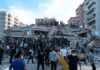
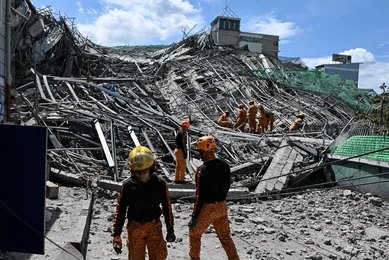
Caracas felt the brunt in human terms. Interior Minister Diosdado Cabello said buildings collapsed and called the scenes in Altamira “alarming” as night crews worked through debris [1]. That claim matched images of fallen facades and dusted streets shared across broadcasts, but the picture remained incomplete in the first hours. Newsrooms carried raw statements while rescue teams still counted heads, a gap that always tests public trust during fast-moving disasters.
Why The Magnitudes Do Not Match Across Outlets
Different outlets posted different magnitudes within the same evening. One report flagged a separate 6.3 event in western Venezuela, near Mene Grande, which may be a distinct quake in the broader sequence or a mix-up with aftershocks [3]. Another early brief said there were no confirmed injuries or damage, which clashed with later collapse reports from Caracas [2]. This swing is common in the first hour. Instruments update. Agencies revise. Editors race the clock. The signal clears over days, not minutes.
Claims also spread about the exact fault. A social post pointed to the Bocono Fault and offered a depth near twenty-two miles [5]. That line fits the area’s known tectonics, but it is not a formal field report. Treat it as a clue, not a conclusion. Wait for the full United States Geological Survey technical readout to confirm the fault plane and slip model. Big quakes have long rupture zones. The real map of motion takes time to build.
Tsunami Alerts And What They Actually Meant
Officials issued tsunami alerts for Puerto Rico and the Virgin Islands after the main shocks, which tells you energy leaked into the Caribbean basin in a way forecasters could not ignore [1]. An alert is not a guarantee of large waves. It is a civil guardrail that buys time for harbors to move boats and for people to back off beaches. The smarter test comes later, when tide gauges report actual heights and durations. Until then, caution beats bravado every single time.
Following the twin earthquakes that struck northwestern and central Venezuela on June 24, 2026, the tremors were felt extensively across the region, triggering building evacuations and safety concerns in several neighboring countries and Caribbean islands:
Colombia: Shaking was…— Chaya Eitan (@ChayaEitan) June 25, 2026
For coastal families, the lesson is simple. When the alerts sound, do not argue with water. Move inland. Bring a radio. Avoid overpasses and sea walls. If the all-clear comes, return with care. Many injuries in quake-tsunami pairs happen during the return rush, not the first hit. Local crews did the right thing by clearing zones fast, then keeping people informed as the readings rolled in.
Media Hype, Government Silence, And The Cost Of Noise
Speed and politics clouded the first-night picture. Some headlines leaned hard on “collapsing buildings” while official casualty counts lagged. That does not mean the collapses did not happen; it means the scale was not yet known [1][2]. In countries under strain, full damage audits can take longer, and updates can slow to a drip. That vacuum invites rumor. Better practice is to anchor on the United States Geological Survey numbers for the size and timing of the shocks, then tie damage claims to named officials or verified images.
From a common-sense view, two large, shallow quakes near a dense capital will break weak structures. The surprise would be zero damage, not reports of fallen walls. Still, numbers matter. Hold broadcasters to the same standard you would expect for your family’s safety decisions. Ask: Who said it? When did they say it? What changed since then? If an outlet corrects a figure as data firms up, that is not a scandal. That is how science and honest reporting work.
What To Watch Next And How To Read The Signals
Watch for the United States Geological Survey event pages to lock in magnitudes, depths, and moment tensors, and for a slip model that shows where the crust tore [14]. Look for a formal engineering survey from Caracas on why specific buildings failed. Seek hospital intake summaries to size the human toll. Expect aftershocks, some strong, for days. If you live in a quake zone, make this your drill: secure tall furniture, store water, and keep shoes and a flashlight by your bed. Prepared beats panicked every time.
Sources:
[1] Web – BACK TO BACK MAJOR QUAKES ROCK VENEZUELA… MORE
[2] Web – Back-to-back powerful earthquakes hit Venezuela, …
[3] Web – Powerful 7.1 and 7.5-magnitude earthquakes hit Venezuela
[4] Web – Venezuela hit by 6.3-magnitude earthquake
[5] Web – 2026 Venezuela earthquake
[14] Web – A powerful 7.1-magnitude earthquake shook Venezuela …