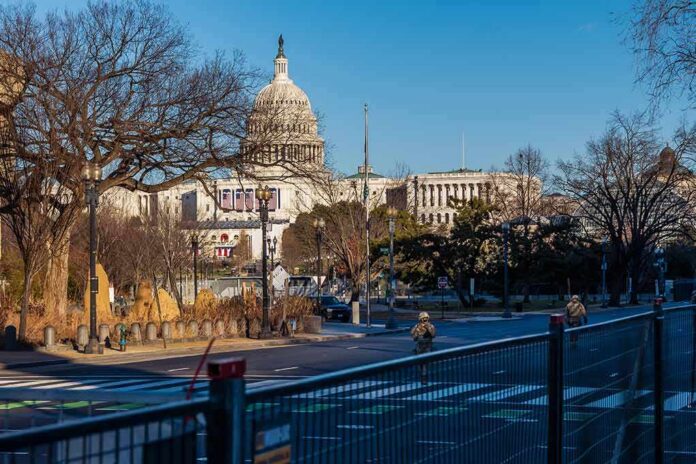
Washington moved into quiet readiness after U.S. intelligence flagged unusually specific Iranian plans for a dirty bomb or chemical attack targeting senior officials in the capital.
Story Snapshot
- Officials described specific locations and targets in Washington, D.C. tied to Iranian planning.
- Two threat paths surfaced: a radiological dirty bomb and a chemical weapon.
- President Trump warned Iran of severe consequences if any attack occurred.
- The White House also said there were no credible homeland threats at this time.
What Intelligence Signaled And Why It Mattered
Seven U.S. officials told reporters that new intelligence showed Iran working up plans for attacks in Washington. The reporting cited specific potential locations and targets that pushed agencies into contingency mode. The same briefings pointed to two possible tools: a radiological dispersal device, often called a dirty bomb, and a chemical agent. That pairing matters because it signals intent to create mass fear and disruption, not just physical harm. Both paths carry very different technical hurdles, logistics, and signatures.
Officials described the planning as option-setting, not proof of an imminent strike. The detail still triggered action because planning can flip to execution fast if a decision is made. Law enforcement and homeland security teams plan for that turn. They look for procurement, travel, safehouses, and test activity. The tougher question is authorization. The reports did not show a direct order from Tehran or a working cell inside the United States ready to go.
What The Administration Did And Said
President Trump set a public red line. He warned that Iran would face a major price if it detonated a dirty bomb or carried out any such attack in Washington. That message aimed to deter, and it signaled unity among security agencies on consequence, even as analysts binned the threat as preliminary. The White House also said it saw no credible homeland threat at that time. That statement kept public risk in check while teams worked the leads.
This mix—firm deterrence and calm public posture—tracks with standard crisis playbooks. Leaders avoid panic while making clear that crossing the line brings pain. That balance fits conservative principles: peace through strength, clarity over ambiguity, and a bias for action that protects Americans first. Critics say such warnings can sound alarmist. The stronger case says sunlight and consequence messaging can stop attacks before they start.
Dirty Bombs, Chemical Weapons, And Real-World Effects
A dirty bomb spreads radioactive particles using a normal explosive. Its main punch is fear, disruption, and costly cleanup. Most experts say expected deaths in many scenarios are in the tens, not thousands, but the panic and economic shock can be massive. A chemical attack is different. It requires acquiring, handling, and delivering toxic agents under tight time and safety limits. The technical demands are higher, and the supply chains risk exposure at many points.
4/18 — U.S. Intelligence Warns of Possible Iranian Dirty Bomb Plot
CNN reported on November 16, citing seven U.S. officials, that intelligence indicated the Iranian regime was planning a possible dirty-bomb or chemical-weapons attack in Washington, potentially targeting senior… pic.twitter.com/8Ql34hhs4Z
— Iran News Update (@IranNewsUpdate1) November 17, 2026
Reports also surfaced of chatter about bomb-making materials hidden in the United States. That claim, if proven, would mark a serious escalation, because prepositioned materials cut timelines and make detection harder. The public record does not yet show seizures or arrests tied to such stashes, so readers should treat that as an open lead, not a settled fact. Investigators would look for purchase trails, storage sites, and testing residues to confirm or refute it.
How To Read The Conflicting Signals
Anonymous-source intelligence can be both vital and messy. The record here shows specific planning details that triggered real contingency work, paired with an explicit judgment that an attack was not imminent. It also shows open debate inside the government over credibility and capability. That tension does not negate the warning; it defines it. Good policy treats detailed intent as serious while requiring proof before claiming a near-term strike window.
The right next steps are disciplined and testable. Congress can demand closed briefings on sources, methods, confidence levels, and timelines. Agencies can brief on any evidence of radioactive materials or chemical precursors inside the country. If evidence exists, chain-of-custody records, lab results, and court filings should follow. If not, leaders should say so clearly. Clear lines reduce rumor and keep public trust steady without dulling deterrence.
What To Watch In The Days Ahead
Watch for three tells. First, operational breadcrumbs: arrests, seizures, or search warrants that show movement from talk to action. Second, allied corroboration: matching reports from partners who often spot travel, money, or logistics. Third, message discipline: steady, aligned updates from the White House and security agencies. If those tracks firm up, the risk picture shifts. If they do not, the threat stays in the planning bin while deterrence and vigilance hold the line.
Deterrence only works if it is credible and measured. President Trump’s warning set the consequence bar. The White House’s calm tone set public expectations. Agencies now have to do the quiet work: check the materials story, test the chemical path, and map any network footprint here at home. That blend—firm, focused, and fact-led—is how you stop a nightmare before it gets a fuse.
Sources:
newsweek.com, edition.cnn.com, timesofisrael.com, cnn.com