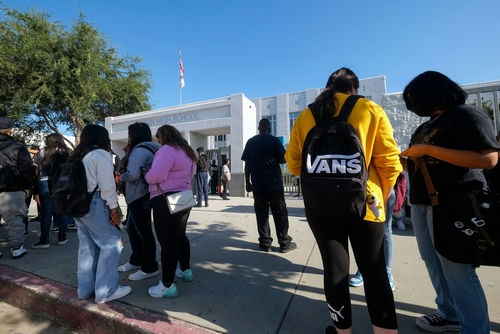
Florida just drew a hard line at the college gate, turning “lawful presence” from a talking point into a real barrier for thousands of young people who grew up in the state but lack legal status.
Story Snapshot
- Florida’s State Board of Education voted to ban undocumented students from its 28 public colleges and adult education programs, allowing admission only for citizens or those lawfully present in the country.
- Students must now provide “clear and convincing” proof of citizenship or legal status before enrollment, with each college’s board of trustees required to enforce the rule.
- Analysts estimate state colleges could lose about $15 million a year in tuition and fees, undercutting claims that the ban protects scarce public resources.
- Florida’s public universities are moving toward a similar ban starting in the 2027–28 academic year, with a separate rule targeting undocumented students at competitive campuses.
Florida Makes Lawful Presence the New Key to the College Door
The Florida State Board of Education has approved a rule that blocks undocumented students from enrolling in the 28 institutions that make up the Florida College System. Under the policy, colleges may admit only applicants who are United States citizens or “lawfully present in the United States,” and every student must provide documentation proving that status before admission or enrollment. This language shifts college admissions from academic readiness to immigration status as the first gate every applicant must pass through.
The rule also reaches beyond traditional degree programs into adult education. Florida’s Department of Education tied the same lawful presence standard to adult general education, including courses that help people earn a high school equivalency diploma or basic skills they need for later college study. Undocumented adults who might seek a General Educational Development certificate or English classes will now hit the same wall as teenagers applying to a state college. Supporters describe this as enforcing the law consistently; critics call it a blunt instrument that ignores how education helps people work and pay taxes.
Part of a Larger Immigration and Education Strategy
This move did not come out of nowhere. Last year, Florida repealed in-state tuition for undocumented students, forcing them to pay far higher out-of-state rates or drop the idea of college altogether. Governor Ron DeSantis has backed a broader agenda that ties almost every public benefit to immigration status, and this rule fits that pattern by tightening access to taxpayer-supported colleges for those without legal status. It also follows a failed legislative push to write a similar ban into law, after Senate Bill 1052 would have barred any non-citizen or non-lawful resident from enrolling at state colleges and universities.
When lawmakers could not fully lock this policy in statute, education officials picked up the baton. The Board of Education’s rule requires each college’s board of trustees to build procedures so applicants attest under penalty of law that they are citizens or lawfully present, then provide “clear and convincing documentation” that is “credible, precise, and compelling.” That phrasing echoes courtroom standards more than campus paperwork. For conservatives who want firm rules and fewer loopholes, that is a feature, not a bug, because it raises the bar for anyone trying to slip through with weak or confusing paperwork.
Universities Move in Parallel and Questions About Authority Grow
Florida’s public universities are on track to follow suit. The Board of Governors, which oversees the 12 state universities, has advanced a proposed regulation that would block new students who are “not lawfully present” in the United States from enrolling at selective campuses starting in the 2027–28 academic year. The draft rule targets universities that do not admit all academically qualified applicants, such as the University of Florida or University of South Florida, and defines lawful presence by referring directly to federal government standards. Current students would not be forced out, but future undocumented applicants would see the door closed.
These rules have not escaped scrutiny. The Florida Policy Institute argues that the Department of Education and its boards may be overstepping, because there is no clear state statute ordering colleges to deny admission based on immigration status. A legislative oversight committee has questioned whether education officials have the legal authority to make such sweeping changes without explicit direction from lawmakers. From a common-sense conservative view, process matters: even if many citizens agree that public colleges should focus on lawful residents, they also expect major policy shifts to follow the constitutional path through the legislature, not backdoor rulemaking by agencies.
Fiscal Costs and the Broader National Landscape
Supporters of the ban often frame it as a way to protect limited state resources for citizens and legal residents. However, Florida’s own numbers tell a different story. The Florida Policy Institute estimates that barring undocumented students will cost state colleges more than $15 million a year in lost tuition and fees. Palm Beach State College alone could lose roughly $1 million, and three large colleges together could see about $4 million vanish. Those dollars come from students paying to attend, not from direct state aid, which means the rule may shrink college budgets without saving taxpayers a dime.
“Exploring all options”: Advocates vow to fight Florida state college ban on undocumented students https://t.co/mYhLLSmf16 pic.twitter.com/hCldXC9xBI
— WFTV Channel 9 (@WFTV) July 4, 2026
Florida is not alone here. A national map of state policies shows about 15 states with “prohibitive enrollment” or tuition rules that restrict access or financial aid for undocumented students, including places like South Carolina and Georgia. At the same time, federal guidance makes one point clear: federal law does not forbid states or colleges from enrolling undocumented students, and admission itself is not listed as a regulated public benefit. That means these bans are choices, not legal obligations. The deeper question for Florida is whether blocking hard-working young people from earning degrees actually serves public safety and prosperity, or whether it trades long-term gains for short-term political points in an already heated immigration debate.
Sources:
gatewayhispanic.com, highereddive.com, youtube.com, newsfromthestates.com, facebook.com, wftv.com, insidehighered.com, wusf.org, floridapolicy.org, chronicle.com, presidentsalliance.org